| |
CDJ 2026 Kar HC 1208


|
| Court : High Court of Karnataka |
| Case No : Writ Petition No. 19282 Of 2025 (GM-RES) |
| Judges: THE HONOURABLE MR. JUSTICE S. SUNIL DUTT YADAV |
| Parties : Ms. X Versus State Of Karnataka, Represented By The Chief Secretary, Bangalore & Others |
| Appearing Advocates : For the Petitioner: Rithika Ravikumar., Advocate. For the Respondents: R1 & R3, Prathima Honnapura, AAG, Hema Kumar, AGA, R2, Swagatha Raha, (Amicus Curiae), R4, Shilpa Rani, Advocates. |
| Date of Judgment : 07-10-2026 |
| Head Note :- |
Constitution of India - Article 226 -
Comparative Citation:
2026 KHC 56135,
|
| Summary :- |
|
| Judgment :- |
|
(Prayer: This Writ Petition is filed uner Article 226 of the Constitution of India, praying to a. directing Respondent No.2 to admit / examine the petitioner and take necessary medical steps to terminate the pregnancy of the petitioner and etc.)
CAV Order
1. The present case starts of as a petition filed by a minor girl aged 16 years seeking termination of pregnancy and has eventually culminated in the State notifying of a Standard Operating Procedures [SOP] for Early Identification and Timely Response to Underage Pregnancies.
2. The petitioner Ms. X is represented by her mother as a guardian. The mother works as a housemaid, is a single parent, and hails from financially weak background.
3. The petitioner is a victim of sexual assault and unable to reveal such incident to her mother has suppressed such fact till it has resulted in the petitioner conceiving upon results of tests confirming conception and such conception could no longer be hid from her mother, the petitioner pursuing her studies in 9th Standard at Nagarabhavi Maruthi Nagar School being managed by the BBMP (Municipal Authority] did not desire to continue her pregnancy. Thereafter, approach is made to the respondent no.2 - Vanivilas Women's and Children Hospital. The present petition is filed seeking for appropriate directions so as to permit medical termination of pregnancy.
4. The petitioner has made out a case of violation of Right to Life under Article 21 of the Constitution of India including Right to Reproductive Freedom and Bodily Autonomy, Right to Privacy and Liberty while approaching this Court.
5. It is also made out that the petitioner being a child in need of care and protection as recognized under the Juvenile Justice (Care and Protection of Children) Act, 2015 has sought for appropriate directions by this Court in exercise of the Court's role as 'parens patriae'.
6. It was also made out that continued pregnancy results in her re-living the trauma of sexual assault and has an adverse impact on her mental health thereby threatening her life and accordingly, has sought for intervention by the Court to enable termination of pregnancy.
7. This Court, upon consideration of the request, by order dated 04.07.2025 had permitted the petitioner for termination of pregnancy, subject to opinion of the Doctors. The Court had further directed that, in the event, the foetus is alive after the procedure, steps are to be taken for its healthy growth.
8. A report came to be filed before the Court on 03.07.2025 after conducting the procedure detailing that the foetus has survived.
9. Having noticed the delayed approach for termination of pregnancy after thirty weeks and in the context of the factual matrix, the Court has passed certain directions on 16.07.2025, which is as follows:-
".....Taking note of the fact stated in the present case and the approach of the petitioner after 30 weeks, certain directions may be required to be passed regarding -
(1) In case of sexual offences early detection, if the victim has conceived;
(2) In light of the present facts and assertion of the petitioner that the foetus is alive even after MTP procedure has been carried out and the petitioner does not intend to retain the custody of the child and has decided to give up custody to the State, necessary directions may be required to ensure that the right to life of the foetus is honoured;
(3) Other directions regarding adoption and care till the foetus is adopted is required to be passed;"
Ms. Swagatha Raha is appointed as Amicus Curiae to assist this Court.
The learned counsel for the petitioner further submits that in terms of the order passed in W.P. No.27563/2023 at para 11(vi) the State Government was directed to prepare a detailed Standard Operating Procedure, in an identical factual matrix. The respondent - State to find out what steps are taken.
The matter is treated as part-heard.
The parties are permitted to file proposed guidelines that may be taken note of by the Court to be issued."
10. The context in which such direction was passed was the factual matrix that presented a case where victim of sexual assault who with reasonable foresight ought to have taken a decision regarding continuance or termination of pregnancy at the initial stage has approached the Court after thirty weeks to terminate the pregnancy. Either the victim was silenced by fear of societal shaming and stigma or that she was unaware of her legal right for termination of pregnancy resulting in such delayed approach to the Court putting herself in danger. In light of the plight of the victim of sexual assault, the Court felt that legal framework was silent and could not ameliorate the condition of a victim of sexual assault. This necessitated framing of an SOP addressing all aspects.
11. While the lis itself was disposed of, the Court proceeded to pass directions eliciting suggestions from the petitioner, the State, and the Amicus Curiae towards formulation of an SOP that would put in place a procedure whereby:-
(a) unwanted pregnancies arising out of sexual assault could be avoided;
(b) directions given to the Police Authorities to react appropriately in case of pregnancy as a result of the offence of sexual assault;
(c) the Department of Health and Child Development facilitating the victim to undergo safe termination of pregnancy procedure upon request and take steps to look after the health of the victim;
(d) the Department of Health and Child Development to take steps for counselling of the victim and parents and to afford institutional care, if required and educate the victim regarding surrendering of child;
(e) the Department of Education to be involved so as to introduce appropriate sexual education modules as well as organizing training;
(f) the KSLSA and DLSA to facilitate early disposal of writ petitions and offer necessary legal services;
12. The Court had passed series of orders involving various stakeholders with the objective of such exercise. It was for the State to respond to what presented a pattern of factual matrix that required appropriate response when the shortcomings of the existing legal framework was apparent.
13. The acceptance and implementation of an executive order, legislation, or a judicial direction rests on the implementing agency. Very often the Courts do intervene in passing orders and directions that address common problems being faced by the citizenry, however, the effectiveness of implementation of such directions are dependent upon how the agencies perceive such directions emanating from an adjudicatory body and not from the Executive.
Often, Courts passing directions find them not being implemented, as such directions are perceived to be judicial overreach by the implementing agencies. The refusal of the Executive to implement directions is manifested in inaction and an attitude of inertia. The way out would be for the Court to involve the Executive in designing an Executive direction keeping in mind the objective with which the Court had intended to pass such directions. Such an approach involving other State players in designing the Executive instruction to fill a void which eventually may require replacement by a legislative measure would involve a process of dialogue between the State actors. Such an approach is necessitated by new problems that have emerged, while the existing legal framework including executive and legislative measures falling short to address such problems.
14. Legal Scholars, such as, Roscoe Pound have been at the forefront of advocating dynamism in law by perceiving law as an instrument of social engineering. Such approach being divergent from the pure theories of law is construed to be a sociological approach to address social issues where existing legal framework falls short and also enables law to order Society so as to enhance rights qualitatively and respond to changing needs of the Society.
15. The Court has attempted such an exercise which is reflective, which are as follows:-
This Court has attempted such an exercise which is reflected in the following orders. In the order dated 05.01.2026 this Court, considering the gravity of the subject matter, identified the need for and co-ordinated a joint meeting to discuss the proposed SOP between the Petitioner, Amicus, and State. In the order dated 25.04.2026, this Court took note of the developments pursuant to the order dated 05.01.2026: the State had proposed a draft SOP based on submissions of the various parties. This draft SOP was acceptable to both the Petitioner and Amicus. Further, in order dated 30.04.2026, this Court has accommodated the State willingness to accept further suggestions by the parties concerned and directed the State to finalise the SOP. The orders dated 05.01.2026, 25.04.2026, and 30.04.2026, are reproduced in full in Annexure-'A'.
16. Finally, the State has engaged with directions of the Court, suggestions of the Amicus and has responded by way of a draft SOP.
17. While the Court could have converted the proposal of the draft SOP into judicial directions, however, the effectiveness of a response formalised by the State and being notified appeared to be a desirable course of action. On the Court's nudge, the State readily accepted notifying of SOP. The order of the Court dated 03.07.2026 would reflect the above.
"Smt. Prathima Honnapura, learned Additional Advocate General appearing for the State submits that after due consultation, draft of the SOP has been filed. It is further submitted that in light of broad consensus amongst the amicus and the learned counsel for petitioner, the State would take steps to notify the SOP. It is further noticed that the formulation of the draft SOP was also preceded by consultation by the State officials along with the petitioner and the amicus. It is further submitted that the SOP would be gazette by the next date. ..."
18. Eventually on 31.07.2026, the State reported the gazetting of the SOP. The SOP is reproduced in full in Annexure-'B'. In light of the same, the matter does not call for further adjudication and is accordingly disposed of.
19. This Court appreciates the assistance and efforts of Smt. Prathima Honnapura, Additional Advocate General, Sri Hemakumar learned Additional Government Advocate and Ms. Swagatha Raha, Amicus Curiae, learned counsel for the petitioner Ms.Rithika Ravikumar.
ANNEXURE-'A'
Order dated 05.01.2026
The petitioner had filed before the Registry a proposed draft SOP. In response to that, additional submissions have been filed by the Amicus who is present in the Court.
The Amicus has also made oral submissions in addition to the written submissions made. The Amicus is to file before the Registry the written proposed alterations to the SOP already submitted by the petitioner.
In the interregnum, as the eventual responsibility would be that of the State to frame an SOP considering the gravity of the subject matter in issue, it would be appropriate that there be a joint meeting wherein the Amicus, counsel for the petitioner could make presentation relating to the pleadings filed in the Court by way of a proposed SOP to enable the State to take their stand before the Court which would pass directions in the nature of an SOP which would be in force till eventually the State would itself frame the SOP.
If the State were of the view after deliberation that the SOP filed by the petitioner with additions of the Amicus itself could be made into an order and passed as a direction by this Court, the State is at liberty to take such stand.
To enable the meeting as referred to above, the Government Advocate is directed to coordinate and ensure that there be a meeting within the next two weeks.
In light of the nature of directions to be issued cutting across various departments, it would be appropriate that the meeting be convened in the presence of the Chief Secretary, the Secretary, Department of Women and Child Development, the Secretary, Department of Health and Family Welfare as also the Secretary, Department of Education. The Secretary, Juvenile Justice Committee also to be notified of the date of the meeting.
Copy of this order to be communicated to the Chief Secretary and handed over to the Government Advocate as well.
List this matter on 09.02.2026.
Meanwhile, taking note of the factual matrix, learned AGA to file a report regarding the condition of the child who was born at the time of the MTP procedure. Such report to be filed within two weeks.
Legal compendium has been filed by the petitioner before the Registry, which is taken note of.
Order dated 25.04.2026
Smt. Prathima Honnapura, learned Additional Advocate General appearing alongwith learned Additional Government Advocate for respondent State submits that the respondent State after taking note of the written submissions of Amicus Curiae as well as that of the petitioner and upon consultation with various stakeholders, has proposed the Draft Standard Operating Procedure (SOP) for Early Identification and Timely Response to Underage Pregnancies and the same is filed alongwith the memo.
The memo is taken on record.
The petitioner and the Amicus Curiae to also express their views regarding the same.
Re-list the matter on 30.04.2026.
Order dated 30.04.2026
Smt.Prathima Honnapura, learned Additional Advocate General appearing on behalf of respondent State submits that Amicus Curiae has expressed certain suggestions to be incorporated in the Draft S.O.P. filed on 25.04.2026 before this Court. It is further submitted that the Government is looking into the said suggestions and would revert on the next date.
The submissions of Amicus Curiae are taken on record.
Learned counsel for the petitioner submits that they have some suggestions to the draft S.O.P.
It is open for the petitioner to make such suggestions and the respondent State would look into the same while finalizing the S.O.P by the next date.
Re-list the matter on 03.07.2026."
ANNEXURE-'B'
Draft Standard Operating Procedures (SOP) for Early Identification and Timely Response to underage Pregnancies, as per the direction of the Hon'ble High Court of Karnataka Ms. X.V.
State of Karnataka, W.P. No. 19282/2025
Dated: 16/7/2025 & 15/01/2026
Contents:
1. Objectives of the SOP
2. Scope
3. Guiding Principles
4. Procedures to be followed by the Police
5. Procedures to be followed by Registered Medical Practitioners
6. Procedures to be followed by Medical Boards
7. Procedures to be followed by CWC in respect of a Pregnant Minor
8. Responsibilities of Child Care Institutions, Residential Institutions and Hostels.
9. Responsibilities of DCPU
10. Role of Forensic Sciences Laboratory
11. Role of the support person
12. Role of the KLSA and DLSA
13. Monitoring and Review
14. Grievance Redressal Mechanisms
15. Annexure 1 : Form A Intimation under section 19 (1) POCSO Act.
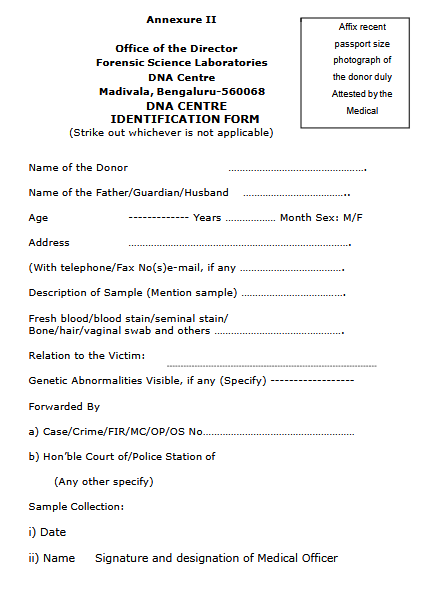
16. Annexure 2: Identification Form
Introduction:
Underage (or teenage) pregnant refers to a pregnancy in a female with pregnancy under the age of 18. It is a critical global public health and social issue linked to Sexual Offences, poverty, lack of education, and limited access to contraception. It carries severe health and socioeconomic consequences for young mother.
The Protection of Children from Sexual Offences (POCSO) Act, 2012 is an Indian legislation designed to protect children from sexual abuse, exploitation, and pornography. It is a gender-neutral law that defines a child as anyone under the age of 18 and prioritizes the child's well-being throughout all legal proceedings.
Sexual violence is a significant cause of physical and psychological harm and suffering for children. The health concerns of survivors/victims of sexual violence, and their right to health is an issue of importance. The Right to Health is not a fundamental right in India. However, the Supreme Court has interpreted the Right to Life as including the Right to Health. The Right to Health is enshrined in a number of international instruments ratified by India, including the International Covenant on Economic, Social and Cultural Rights (ICESCR), the Convention on the Elimination of Discrimination against Women (CEDAW), the Convention of the Rights of the Child (CRC), and the Convention on the Rights of Persons with Disabilities (CRPD).
The right to health care requires the state to ensure that appropriate physical and mental health services are available without discrimination and are accessible, acceptable and of good quality. This includes medical treatment for physical injuries, prophylaxis and testing for sexually transmitted infections, emergency contraception, unwanted pregnancy and psychosocial support. Recognizing the right of all persons to health, health care workers must obtain informed consent of the survivors/victims of sexual violence prior to conducting medical examinations or initiating medico-legal investigations. All medico-legal examinations and procedures must respect the privacy and dignity of the survivor. To realize the right to health care of survivors/victims, health professionals must be trained to respond appropriately to their needs, in a sensitive and non- discriminatory manner respectful of the privacy, dignity and autonomy of each survivor. Health workers cannot refuse treatment or discriminate on the basis of gender, sexual orientation, disability, caste, religion, tribe, language, marital status, occupation, political belief, or other status. Refusal of medical care to survivors/victims of sexual violence and acid attack amounts to an offence under Section 200 of the Bharatiya Nyaya Sanhita, 2023 read with Section 397 BNS of the Bharatiya Nagarik Suraksha Sanhita, 2023.
BACKGROUND:
In Ms. X v. State of Karnataka, W.P. No. 19282/2025, the Hon'ble High Court of Karnataka was seized of a matter concerning a minor aged 16 years who sought permission to terminate her pregnancy of 32 weeks, which was a result of sexual assault. Based on the opinion of the Medical Board, the termination was carried out, and the foetus was born alive. The child- mother subsequently surrendered the baby before the Child Welfare Committee.
The facts of the case clearly show several challenges that has led to the late detection of the pregnancy and hence consequently the late-stage termination of the pregnancy leading to the possibility of the birth of a viable foetus / infant despite the termination procedure:
By order dated 16.07.2025, this Hon'ble Court was pleased to consider the need for Framing guidelines on the following aspects:
1. In case of sexual offences early detection, if the victim has conceived.
2. In light of the present facts and assertion of the petitioner that the foetus is alive even after MTP procedure has been carried out and the petitioner does not intend to retain the custody of the child and has decided to give up custody to the State, necessary directions may be required to ensure that the right to life of the foetus is honored;
3. Other directions regarding adoption and care till the foetus is adopted is required to be passed.
Unintended and late detection of pregnancies among adolescents are driven by lack of comprehensive sexual education, fear of family and social backlash, myths & misconceptions about contraception and termination. These risks are compounded where girls face coercion, exploitation, or intellectual disabilities, limiting disclosure and timely detection of pregnancy. Delays are further caused due to minimization of symptoms and gaps in follow-up care after sexual assault. Access to timely abortion for pregnant minors is also hindered due to legal misinterpretation of provisions of the Medical Termination of Pregnancy (Amendment) Act, 2021, personal beliefs of functionaries and service providers, and fear of medico-legal liability. Children in CCIs face compounded barriers and jurisdictional hurdles.
The mandatory reporting requirements also create complications. This SOP seeks to enable early detection of pregnancy and facilitate timely access to medical termination of pregnancy, in compliance with applicable laws, rules, and guidelines.
Legal Context The Medical Termination of Pregnancy (Amendment) Act, 2021, is applicable to situations in which a child is pregnant, and the child and their guardian seek termination of the pregnancy. As per:
a. Section 3(2) of the MTP Act, 1971 where any pregnancy is alleged by the pregnant woman to have been caused by rape, the anguish caused by the pregnancy "shall be presumed to constitute a grave injury to the mental health of the pregnant woman".
b. Section 3(4) (a) of the MTP Act, 1971 states that "No pregnancy of a woman, who has not attained the age of eighteen years, or, who, having attained the age of eighteen years, is a mentally ill person], shall be terminated except with the consent in writing of her guardian".
If the pregnancy is under 24 weeks, no CWC or Court order is required for the termination of pregnancy. Permission of the police to proceed with the termination is not required either".
The Protection of Children from Sexual Offences Act, 2012 (POCSO Act) and POCSO Rules, 2020 lay down the procedures related to reporting of a sexual offence, medical examination, and emergency medical care, which become applicable in the context of a child who is pregnant.
The Juvenile Justice (Care and Protection of Children) Act, 2015 JJ Act, 2015) is applicable to children in need of care and protection and children in conflict with the law. If such a child is pregnant, they will have to be produced before the Child Welfare Committee (CWC), if the sexual assault is by a person with whom they have been living, or they are living in a Child Care Institution and are without parental support or they are found without any home and parental support. The CWC will have to assign a Support Person and facilitate access to counselling, medical services, legal aid, among others, to enable the child and parent/ guardian to make an informed decision about the pregnancy. A guardian may have to be recognized for the purposes of termination of pregnancy, if the child does not have a parent or guardian, they are unfit, or the child's wishes conflict with that of the parent/guardian. If termination is not possible or if the foetus is born alive following termination and the child-mother wishes to surrender the baby, the CWC must follow the procedures for surrender and for declaring the child legally free for adoption.
The Supreme Court of India and several High Courts, including the Karnataka High Court have passed significant decisions related to the reproductive autonomy and rights of a woman seeking abortion. Significant decisions and principles are as follows:
* The Supreme Court in Suchita Srivastava v. Chandigarh Administration (2009) 9 SCC 1 has recognized the right of women to make reproductive choices as a dimension of her personal liberty as understood under Article 21 of the Constitution of India and that this right can be exercised either to procreate or to abstain from procreating.
* The fundamental right of a pregnant person must not be compromised for reasons other than to protect the physical and mental health of the pregnant person.
* Not allowing a victim of rape to decide on whether she wants to continue her pregnancy is violative of her right to liberty and her right to decide.
* The opinion of the pregnant person must be given primacy in evaluating the foreseeable environment of the person under Section 3(3) of the MTP Act.
* In X v Principal Secretary, Health and Family Welfare Department, Govt of NCT, the Supreme Court held that to ensure that minor girls who engage in consensual sexual activity are able to access medical termination of pregnancy, the POCSO Act and the MTP Act must be read harmoniously. For the limited purpose of providing abortion services under the MTP Act, a Registered Medical Practitioner, upon the request of the minor and her guardian, is not required to disclose the minor's identity or personal details. The RMP is also exempt from disclosing the minor's identity in any criminal proceedings which may follow from the RMP's report under Section 19(1) of the POCSO Act.
1. OBJECTIVES OF THE SOP
a) Outline the roles and procedures to be followed by the Police, Registered Medical Practitioners (RMPs), Medical Boards, Child Welfare Committees (CWCs), District Child Protection Units (DCPUs), Support Persons, Child Care Institutions (CCI), One Stop Centers / Sakhi Kendras, for timely detection and response to pregnancy that occurred when a person is below 18 years.
b) Clarify the protocols to be followed to facilitate timely access to medical termination of pregnancy in accordance with the Medical Termination of Pregnancy (Amendment) Act, 2021.
c) Specify the support to be provided by the State Legal Services Authority, District Legal Services Authority, and the District Child Protection Units to minors seeking termination of pregnancy.
d) Specify the responsibilities of the Forensic Science Laboratory in respect of DNA matching of samples.
e) Stipulate the procedures to be followed for the surrender of a foetus born alive following a medical termination of pregnancy and ensuring subsequent care and protection.
f) Specify the monitoring and review mechanism to ensure adherence to statutory provisions, applicable guidelines, and the SOP.
2. SCOPE:
This SOP is applicable to the who le Sta te of Karnataka.
3. GUIDING PRINCIPLES:
3.1. All stakeholders responsible for the implementation of the SOP shall adhere to the procedures and general principles stipulated in Section 3 of the Juvenile Justice (Care and Protection of Children) Act, 2015 and Karnataka Juvenile Justice (Care and Protection of Children) Rules, 2025, procedures outlined in the Protection of Children from Sexual Offences Act, 2012 and Rules, 2020, Medical Termination of Pregnancy (Amendment) Act, 2021, Bharatiya Nagarik Suraksha Sanhita 2023, Adoption Regulations 2022 and other relevant legislations. Further, the Guidelines and Protocols on 'Medico-legal care for survivors/victims of sexual violence', Comprehensive Abortion Care - Training and Service Delivery Guidelines, 2023 and the Guidance Note for Medical Boards for Termination of Pregnancy Beyond 20 Weeks of Gestation issued vide D.O.No,M.12015/58/2017-MCI dated 11 August 2017 issued by the Ministry of Health and Family Welfare and other guidelines as may be issued should by the Central Government and State Government should also be adhered to.
3.2. In particular, the following principles will be adhered to while dealing with children who are pregnant:
a) Provision of healthcare and services shall always be prioritized.
b) Principles of dignity and worth and non- stigmatizing semantics: All children who are pregnant shall be treated with respect and no words, actions, or gestures that are humiliating, blaming, or stigmatizing should be used against them.
c) Principle of participation: All children who are pregnant shall be provided with age-appropriate information about their rights and legal options related to their pregnancy. For children with disabilities, assistance of interpreters and special educators shall be taken.
d) Principle of informed consent: Consent must be sought from the child if they are above 12 years and from the guardian/parent of the survivor if under the age of 12 years. Views of a child below 12 years should also be considered with due regard to their age and maturity. Informed consent shall be sought for medical examination, urine pregnancy test, treatment, termination of pregnancy, and surrender.
e) Principle of best interest: The pregnant child's best interest should be a primary consideration and in assessing or determining the best interest, the child's views; the child's identity; preservation of the family environment and maintaining relations; care, protection and safety of the child; situation of vulnerability; the child's right to health; and the child's right to education must be considered.
f) Principle of equality and non- discrimination: Equal access of all children who are pregnant to health services, including timely termination of pregnancies shall be ensured. Legal formalities or jurisdictional issues shall not impede such access. Children who are pregnant should not be segregated or isolated from other children in Child Care Institutions or residential facilities, unless it is in their best interest.
g) Principle of privacy and confidentiality: Privacy and confidentiality of a child's health status and records shall be maintained.
4. PROCEDURE TO BE FOLLOWED BY THE POLICE: (Early Identification and Timely Response to Underage Pregnancies):
4.1. Take steps to facilitate emergency medical care and medical examination within 24 hours in all cases where a child victim of rape and/or penetrative sexual assault is reported or information is received under Section 19(1)(2), POCSO Act. (Rules 4(3)(b)(c) and 6(1), POCSO Rules, 2020).
4.2. Inform the child and the parent/guardian about the availability of their entitlements, including but not limited to systemic support, Support Persons, victim compensation, and hand over Form A, POCSO Rules, 2020.
4.3. No court or CWC order is required for an MTP if the pregnancy is under 24 weeks. The consent of the child and guardian is sufficient as per (Section3(4)(a)(b), Medical Termination of Pregnancy (Amendment) Act, 2021; Rule 6(3), POCSO Rules, 2020).
4.4. Register Zero FIR, where the jurisdiction of the criminal case is different from where the pregnant person is seeking pre- and post-natal health services or MTP services. Carry on the preliminary investigations, collect the samples from the hospital, and transmit them to FSL and collect DNA reports. Subsequently, transfer the investigation through the proper channel to the concerned police station within the limits where the offence has been committed.
4.5. The police have to arrange the sample container or DNA kit in coordination with the FSL or hospital, and the child or her family, caregiver, attender, or Support Person shall not be required to procure such a container, so as to prevent avoidable delays and distress.
4.6. If the child is pregnant and has opted to undergo a medical termination of pregnancy (MTP), the concerned Medical Officer should provide medico legal case (MLC) intimation to the jurisdictional police station (of the hospital) and ensure that necessary products of conception are collected and preserved. On receipt of MLC, the Police should record the statement of the victim and collect the product of conception/fetus.
4.7. Maintain the chain of custody of the collected samples and hand over the products of conception, along with the case-specific requisition specifying the testing needs, to the Forensic Science Laboratory (FSL) within a shortest span of time and not exceeding seven days. However, if the FSL is located within the same district, the products of conception shall be handed over within 24 hours to prevent deterioration of the sample. In cases arising from remote or far-flung districts, or where the FSL is not operational due to Government holidays or other logistical constraints, the products of conception may be securely stored at the hospital in accordance with prescribed protocols, until they can be formally handed over to the FSL.
4.8. If the foetus is born alive after the termination, the police shall seek the Special Court or High Court's permission for a DNA test promptly, and in any event, within two months, to ensure timely processing and avoid delays in the legal declaration of the child as legally free for adoption.
4.9. Once the child is adopted, no request for collection of DNA samples shall be made, based on the doctrine of eminent need and to ensure the privacy and dignity of the child born and their adoptive parents.
4.10. The Supreme Court has clearly exempted the RMPs from disclosing identity of minor victims in consensual cases seeking abortion. With reference to paragraph 81 of Xv Principal Secretary, Health and Family Welfare Department, Govt of NCT (WRIT PETITION NO. 4126 OF 2025): The Supreme Court has held "For the limited purposes of providing medical termination of pregnancy in terms of the MTP Act, we clarify that the RMP, only on request of the minor and the guardian of the minor, need not disclose the identity and other personal details of the minor in the information PART E provided under Section 19(1) of the POCSO Act. The RMP who has provided information under Section 19(1) of the POCSO Act (in reference to a minor seeking medical termination of a pregnancy under the MTP Act, 1971) is also exempt from disclosing the minor's identity in any criminal proceedings which may follow from the RMP's report under Section 19(1) of the POCSO Act. Such an interpretation would prevent any conflict between the statutory obligation of the RMP to mandatorily report the offence under the POCSO Act".
4.11. Where RMPs do not disclose the identity of the victim in compliance with th Supreme Court's decision in X v. Principal Secretary, Health and Family Welfare, the police shall not compel or coerce them to share identifying information.
5. PROCEDURE TO BE FOLLOWED BY REGISTERED MEDICAL PRACTITIONERS (Provision of medical care and conduct of medical examination)
5.1. Provide immediate medical assistance and care when approached directly by a pregnant minor, or in case where sexual assault is confirmed or suspected. (Rule 6(4), POCSO Rules, 2020; Section 19(1), POCSO Act, 2012) or if the victim with or without parents/guardian comes with the police intimation.
5.2. Obtain informed consent in vernacular language for medical examination, sample collection for clinical and forensic examination, treatment, medical termination of pregnancy, and police intimation, after explaining implications of these processes. Record informed refusal in writing, for undergoing medical examination of the victim if she is more than 12 years of age, or of the guardian, if she is less than 12 years of age.
5.3. Do not deny health services, by compelling the child and their parent or guardian to lodge an FIR or demand any legal or magisterial requisition or any other documents as a pre- condition for medical care. (Rule 6(4), POCSO Rules, 2020)
5.4. Complete the medico-legal examination within 24 hours using the standardized Sexual Assault Forensic Evidence (SAFE) kit. Preserve appropriately, Seal and label all biological samples and document the chain of custody before handing the sealed kit/envelopes over to the Investigating Officer (IO).
5.5. Conduct medical examination in the presence of the child's parent or any other person in whom the child reposes truth or confidence. If the parent or such person is not available or the child does not want any known persons to her to be present, conduct the medical examination in the presence of a woman nominated by the head of the institution. (Sections 27 (3) and (4), POCSO Act. 2012). Simultaneously, intimate the Child Welfare Committee about the matter and seek the deputation of a child protection functionary or a Support Person, to be present with the child. Alternatively inform the One Stop Center / Sakhi Kendra in the district about the unaccompanied by the minor.
5.6. Urine Pregnancy test (UPT) has to be conducted with consent, for the child if she presents with missed periods/ one month after the sexual assault (need not be conducted for all sexual assault victims immediately after the assault or when the last menstrual period is within a month). If necessary, offer a urine pregnancy test and conduct it after informing the child and the parent/guardian about the implications of the test and recording informed consent. However, a follow up visit is to be recommended if the child misses her period in the months following the assault.
5.7. Discuss possible pregnancy and emergency contraceptives with a pubertal child and her parent or any other person in whom the child has trust and confidence. (Rule 6(4)(d), POCSO Rules, 2020) Provide emergency contraception (if appropriate), post-exposure prophylaxis (PEP) for HIV and other STIs, and Hepatitis-B immunization.
5.8. Counsel the child, her parents /guardians about the lawful options available to the child as per the Medical Termination of Pregnancy (Amendment) Act, 2021 and Juvenile Justice (Care and Protection of Children) Act, 2015. (Rule 6(7), POCSO Rules, 2020).
5.9. A follow-up visit is to be recommended if the child misses her period in the months following the assault. If the UPT was conducted immediately after the sexual assault or activity and is negative, counsel the child about the possibility of a missed period and schedule a follow-up after four to six weeks for a second UPT.
5.10. Conduct all medical procedures and treatments, including diagnostic scans, X-rays and other supporting tests and procedures in relation to, leading up to and after medical termination of pregnancy, free of cost. (Section 397, BNSS).
Reporting of Case to the Police and Child Welfare Committee
5.11. Forward the medico-legal case intimation to the jurisdictional police station of the hospital after medical care and assistance is provided, irrespective of whether she gives consent or refusal.
5.12. Do not disclose the minor's identity in the report to the police under Section 19(1), if the minor and her guardian request that their identity is not disclosed while seeking an MTP for a pregnancy arising from consensual sexual activity. Provide intimation to the police as per the details specified in Form A (Annexure I).
5.13. In the case of an unaccompanied minor, intimate in writing, to the Child Welfare Committee or the One Stop Center/ Sakhi Kendra or District Child Protection Unit.
Procedure of Medical Termination of Pregnancy
5.14. Address the concerns and queries and inform the child and parent/guardian about the procedures available and risks involved in undergoing MTP / continuing the pregnancy.
5.15. Obtain the informed consent of the child above 18 years and the parent/guardian for medical termination of pregnancy, in writing. If the parents/legal guardian of the pregnant minor is not available or is deemed unfit, the Child Welfare Committee may recognize a guardian who shall be permitted to sign the consent form for MTP. (Section 2(31) read with Section 30(vi), JJ Act, 2015).
5.16. No order from any Court or Child Welfare Committee shall be required for termination of pregnancy where the gestational period is below 24 weeks, in accordance with the Medical Termination of Pregnancy (Amendment) Act, 2021.
5.17. Hand over all materials collected during the MTP or delivery to the nearest Forensic Science Laboratory through jurisdictional police station.
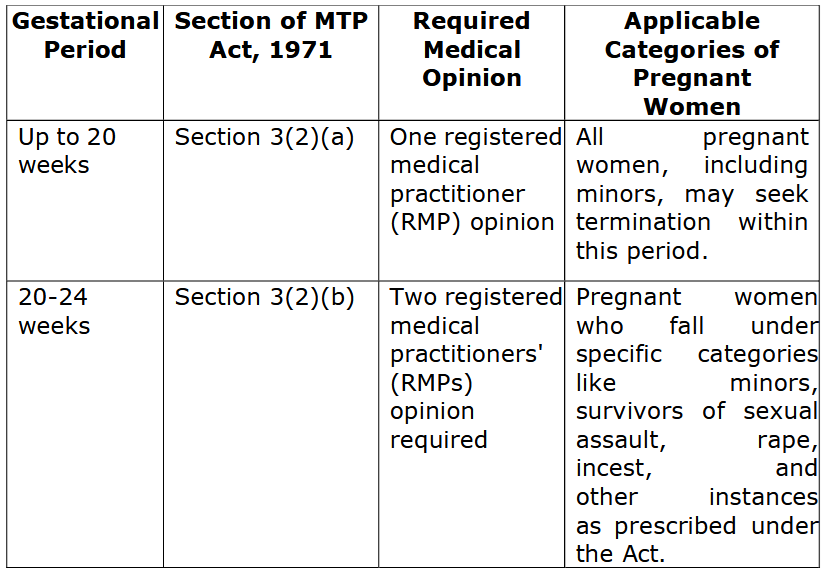
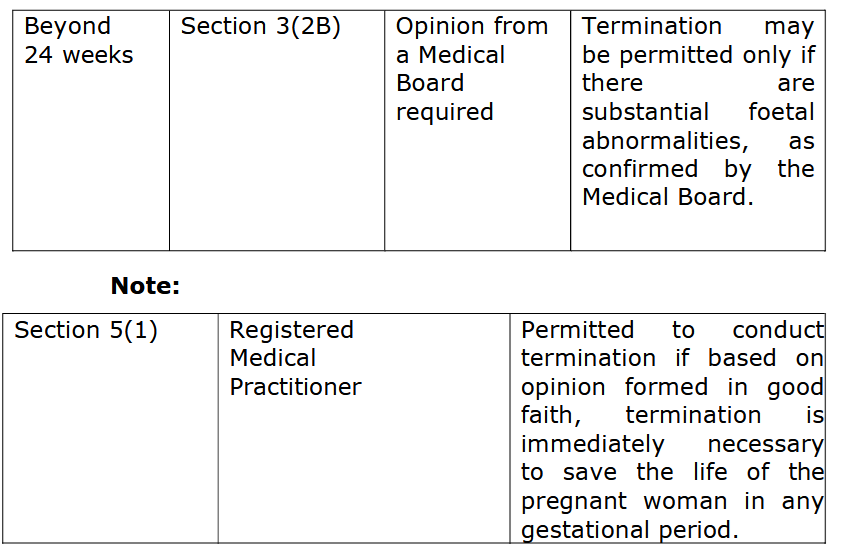
5.18. Medical termination of Pregnancy based on the gestational age has to be done as per the guidelines shown below:
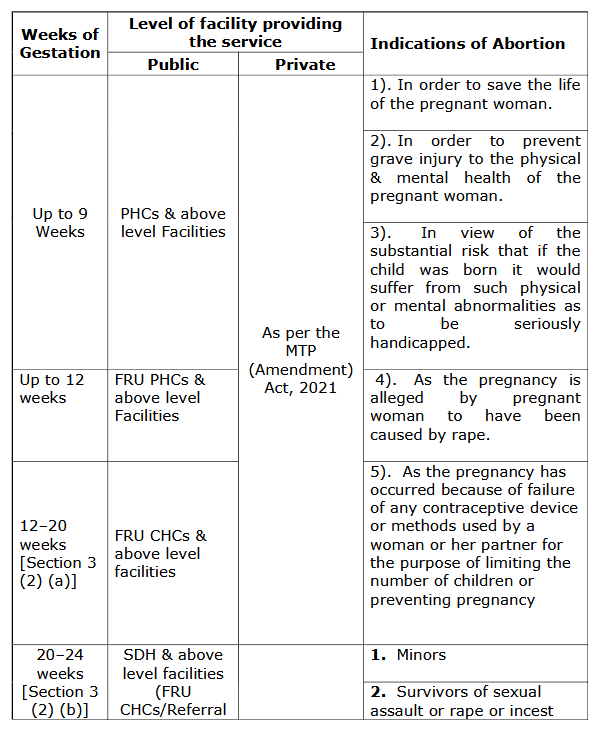
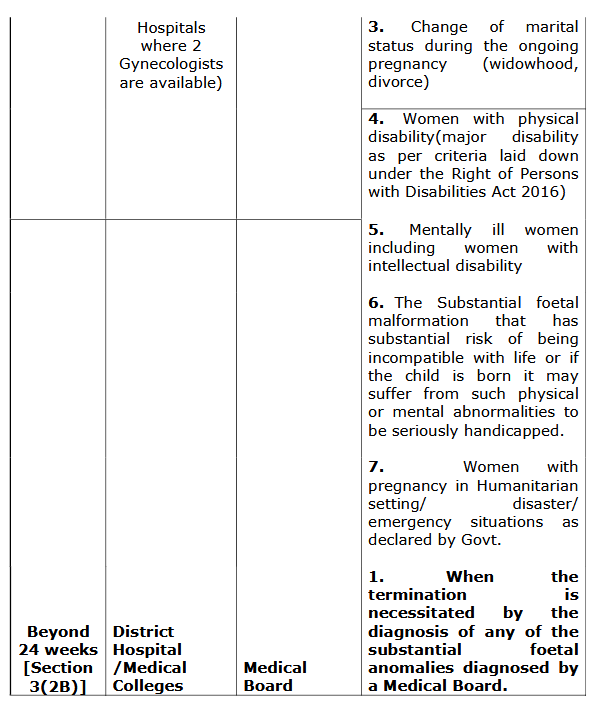
5.18 a). If the pregnancy is under 20 weeks, the opinion of one medical practitioner is sufficient to proceed with the MTP. For pregnancies above 20 weeks and below 24 weeks, the opinion of two practitioners is needed.
5.18 b). Pregnancy of any gestation, termination of pregnancy can be carried out only if it is immediately necessary to save the life of the pregnant woman or if it is necessitated by the diagnosis of any of the substantial foetal abnormalities diagnosed by a Medical Board (Section 3(2B) and 5(1), MTP Act, 1971).
5.19. If the pregnancy exceeds 24 weeks and the child and the parents/guardian wish to terminate, refer them immediately to the District Legal Services Authority or the Child Welfare Committee for support to approach the High Court or Supreme Court, on case basis.
5.20. Where no identity documents are available, consider a letter from the Child Welfare Committee, special court or any other relevant authority as sufficient to proceed with diagnostic and medical procedures.
5.21. Adhere to the Guidelines and Protocols - Medico-legal care for Survivors/Victims of Sexual Violence (2014), Comprehensive Abortion Care service guidelines 2023, and the Guidance Note for Medical Boards for Termination of Pregnancy Beyond 20 Weeks of Gestation, issued vide D.O.No. M.12015/58/2017-MCI dated 11 August 2017 by the Ministry of Health and Family Welfare.
Procedure for collection of Products of Conception.
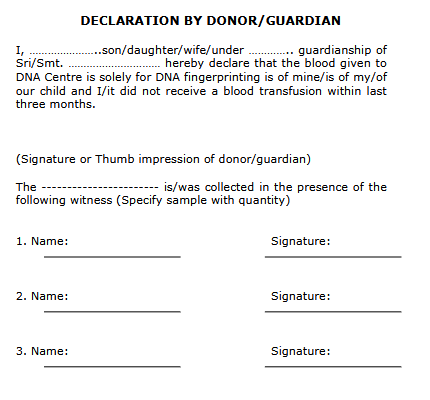
5.22. Obtain and record the consent of the pregnant child or her guardian before taking DNA samples of the Products of Conception ("POC"), ideally prior to the procedure for medical termination.
5.23. Collect the blood sample of the victim and send it along with the (POC) for reference to the FSL. Ensure that the POC is preserved in a saturated solution of sodium chloride or crystal salt. Do not use formalin to preserve any biological samples to be sent for DNA testing.
5.24. Ensure that the IO is informed in writing regarding the MTP, either prior to or during the procedure, so that the sealed and labeled PoC( Product of Conception) along with the requisition letter to FSL is collected by the police and handed over to the FSL.
5.25. The products of conception (POC) may be sent as evidence to the Forensic Science Laboratories (FSL) for establishing paternity/identifying the accused. The examining doctor/AMO/CMO should carry out the MTP. The POC are to be collected in a wide-mouthed glass or plastic container with a lid containing rock salt. Along with POC maternal (Victims) blood should also be collected in EDTA vacutainers for establishing maternity of the POC with the victim. The examining doctor/AMO/CMO should fill the DNA identification Forms and forwarding notes while collecting the samples (All Hospitals where these examinations are carried out should have DNA identification Forms and forwarding notes).
The samples should be properly packed, sealed with wax seal having examining doctor/AMO/CMO/ Hospital impression, kept in temperature control box/ ice box maintaining the temperature around 4oC and handed over immediately to the Police along with DNA identification Forms (Refer to annexure II) and Forwarding Notes and doctor/AMO/CMO/ Hospital sample seal. The Police should transport the samples to the Forensic Science Laboratories within a shortest span of time and not exceeding seven days. However, if the FSL is located within the same district, the products of conception shall be handed over within 24 hours to prevent deterioration of the sample.
5.26. Registered Medical Practitioners (RMPs) should collect and preserve DNA samples post-termination, with the consent of the parent, when the infant is born alive. This ensures the proper preservation of evidence while respecting the privacy and dignity of the family.
Procedure if foetus is born alive
5.27. Extend necessary care and support to the baby until they can be transferred to the Specialized Adoption Agency as directed by the CWC or handed over to the parent or guardian of the survivor, as the case may be.
5.28. Ascertain the willingness of the mother of the infant to remain in contact with the infant, when placed in the NICU. All expenses for the care of the infant shall be borne by the State Government if the infant has been surrendered for adoption or the child-mother is declared a child in need of care and protection.
6. PROCEDURE TO BE FOLLOWED BY MEDICAL BOARDS:
6.1. Allow or deny termination of pregnancy beyond 24 weeks of gestation period under Section 3(2B) only after due consideration and ensuring that the procedure would be safe for the woman at that gestation age and whether the foetal malformation has substantial risk of it being incompatible with life or if the child is born it may suffer from such physical or mental abnormalities to be seriously handicapped. (Section 3(2B), MTP Act and Rule 3A(a)(i), MTP Rules, 2003 as amended in 2021).
6.2. Conduct all medical procedures and treatments, including diagnostic scans, X-rays and other supporting tests and procedures in relation to, leading up to and after medical termination of pregnancy, free of cost. (Section 397, BNSS).
6.3. Do not form legal opinions vis-a-vis the satisfaction of the conditions under the MTP Act and instead provide medical opinion as to the risk involved to the physical and mental health of the pregnant person if pregnancy continues. This opinion should consider the distress and trauma caused by pregnancies, particularly arising from pregnancies outside marriage, sexual assault and incest. It should note any health risks, including future child bearing capacity, involved for the pregnant person if the MTP is conducted.
6.4. Conduct the necessary examinations of her reports and provide a comprehensive report without any delay when directed to do so by the High Court or the Supreme Court in cases where pregnancy exceeds 24 weeks. Provide the opinion of the Medical Board in Form D "Medical Termination of Pregnancy Rules, 2003" with regard to the termination of pregnancy or rejection of request for termination within three days.
6.5. Adhere to the Guidance Note for Medical Boards for Termination of Pregnancy beyond 20 Weeks of Gestation, issued vide D.O.No. M.12015/58/2017-MCI dated 11 August 2017 by the Ministry of Health and Family Welfare and MTP (Amendment) Act 2021. Medical Boards are required to follow this Guidance Note in all relevant cases, ensuring consistency and compliance with the prescribed protocols for termination of pregnancies beyond 20 weeks.
7. PROCEDURE TO BE FOLLOWED BY CWC IN RESPECT OF A PREGNANT MINOR
Provision of timely support and assistance
7.1. Ensure that a pregnant child in need of care and protection and their parent or guardian is provided counseling, medical advice (contraception/ ANC care...etc.), institutional care (if required), special relief, information about termination of pregnancy, option of surrender, Central and State schemes, and support available under the juvenile justice system, to arrive at an informed decision.
7.2. Inform the local police if the matter has not been reported.
7.3. Provide the child the assistance of a qualified child psychologist or Support Person for psycho-social support, preferably in a language that the child can communicate. Instruct the "DCPU" (District Child Protection Unit) to make available translators, interpreters, and special educators, if required. Instruct the counselor to provide clear, unbiased information about all available legal and medical options, including the continuation of the pregnancy and Medical Termination of Pregnancy (MTP).
7.4. Provide integrated support and assistance to minor pregnant girl child victims as mandated under the Scheme for Care and Support to Victims under Section 4 & 6 of the Protection of Children from Sexual Offences (POCSO) Act, 2012.
7.5. Instruct the DCPU and Support Person to enable the child's timely access to medical care and services if the child is below 24 weeks of gestation, and the child and their guardian wish to terminate the pregnancy.
7.6. Avoid passing orders permitting a termination of pregnancy, as CWC is not authorized to pass such orders and all terminations have to be conducted in accordance with the provisions of the Medical Termination of Pregnancy (Amendment) Act, 2021.
7.7. Record, in writing, the intent and wish of the child to terminate the pregnancy. The child's own informed choice and consent are paramount and must be respected, free from coercion from family, guardians, or institutional authorities.
7.8. Facilitate the termination within the shortest time possible after the pregnancy has come to light and the child and guardian have consented for termination. In pregnancies under 20 weeks, the termination should be facilitated within a week. In pregnancies above 20 weeks, the termination should be facilitated within two days following the Medical Board/ court opinion.
7.9. Contact the "DLSA" (District Legal Service Authority) or other private lawyers offering pro bono services for prompt access to legal representation if the length of the pregnancy is above 24 weeks and the pregnant child in need of care and protection wishes to undergo a Medical termination of pregnancy. (Section 30(xvii), JJ Act). For a child whose gestation exceeds 24 weeks and is in a CCI/hostel, make available all necessary documents to the lawyer submitting a writ petition to the High Court.
7.10. Recommend special relief under Rule 8, POCSO Rules, 2020 in suitable cases.
7.11. Ensure that the Individual Care Plan is prepared and comprehensively addresses the child's educational, health and other needs as per the Rule 9 POCSO Rules, 2020.
7.12 The Child Welfare Committee will take steps to submit a case report to the Police Department and Legal Services to expedite the process of the case.
If child's Parent/guardian is unavailable, unfit, unable to travel from a different State, or their views conflict with that of the child.
7.13. If the child is an orphan or if the child's parents are unfit to provide care and protection or are unable to physically be present within 24 hours, or their views are at variance with that of the pregnant child, and the child wishes to terminate the pregnancy, pass an order to recognize a guardian for the purpose of providing consent on behalf of the child for the medical termination of pregnancy.
If the child wishes to continue the pregnancy and the parents wish for it to be terminated, the wish of the child has to be respected. For a child placed in a CCI, the Person-in-charge may be recognized as the guardian for this purpose. (Section 30(vi) read with Section 2(31), JJ Act, 2015).
7.14. Where the child in need of care and protection seeking an abortion hails from a different State and it is not possible for the parent or guardian to travel to be present for the giving of consent within a reasonable time frame or the parent or guardian are unwilling to provide consent, recognize the Person-in-Charge of the Children's Home of the facility in which the child is placed as the guardian for the purpose of compliance with provisions of Section 3(4)(a) of the MTP Act.
7.15. Do not delay facilitating the termination of pregnancy of a child in need of care and protection placed in a Child Care Institution, particularly on the grounds of lack of clarity on where the conception took place and notwithstanding the FIR being registered or not.
7.16. For a child who is from another state/ district/jurisdiction and seeks to terminate her pregnancy, but her parents/ caregivers are in their home state/district, make necessary arrangements for her to access timely MTP services. There shall be no delays on account of repatriating her to her home state/ district.
7.17. For children hailing from other states/ districts, instruct the DCPU to coordinate 'between the local CCI, DCPU and the CWC of the district the child belongs to for the speedy repatriation of the child to her hometown, post MTP or delivery, should the need arise.
7.18. If the child decides to continue with the pregnancy and surrender the infant who is born, follow the procedure specified in Section 35, JJ Act, 2015 and if satisfied, declare the child legally free for adoption after giving them two months' time to reconsider. (Sec Act, 2015)
7.19. Ensure that the parents/mother is made aware of all available options, in the instance that the foetus is born alive during the MTP, and survives.
7.20. If the parent wishes to surrender the baby, then follow the procedures under the Juvenile Justice (Care and Protection of Children) Act, 2015, prescribed for an abandoned or surrendered child, as the case may be, and declare the baby to be a child in need of care and protection.
7.21. Inform the parent/mother in a language understood by her that after signing the surrender deed, the child born becomes eligible to be declared Legally Free for Adoption ("LFA"), followed by the adoption process as per the Child Adoption Regulations 2022 and once adopted by Prospective Adoptive Parents ("PAPs"), the adoption is irreversible.
7.22. In case of a child born out of wedlock, only the mother can surrender and if she is a minor and she and her parent or guardian wants to surrender the child, the Deed of Surrender has to be signed by an accompanying adult as a witness. (Regulation 7(7), Adoption Regulations, 2022).
7.23. Before the infant is declared legally free for adoption within the stipulated time frame, coordinate with the IO to ensure that the DNA samples of the infant born are taken, with the consent of the parent or guardian so as to avoid harassment of the child and adoptive parents in future. (Regulation 39, Adoption Regulations, 2022) Any delay in the collection of the DNA sampling must not delay or hinder the process of the child being declared legally free for adoption.
If the Child in Need of Care and Protection chooses to continue the Pregnancy
7.24. Pass necessary directions to ensure the care, protection, and health of the child in need of care and protection, if she chooses to continue with the pregnancy. If the child is placed in a Child Care Institution, ensure that the child receives specialised obstetric and antenatal care, a high-nutrition diet, and psychological support throughout the pregnancy and post-partum period.
7.25. Consider sponsorship and also direct the DCPU to facilitate the mother and child's enrolment in health insurance schemes, and provide all necessary support for the infant's care, and registration of birth. Individual care plans need to be prepared for both the minor mother and the infant.
RESPONSIBILITIES OF CHILD CARE INSTITUTIONS, RESIDENTIAL INSTITUTIONS AND HOSTELS.
7.26. Organize periodic training sessions for staff and children on comprehensive sexuality education, general principles of juvenile justice, and reproductive rights and train staff to respond to queries and concerns of children in a sensitive and non-judgmental manner.
7.27. Avoid mandatory urine pregnancy testing or intrusive checks and surveillance on the menstrual status of children. Ensure that informed consent is taken before any tests are done.
7.28. Inform the police/SJPU and the CWC within 24 hours of receipt of information about the pregnancy of a child, if it is not already reported.
7.29. Facilitate medical examinations with informed consent of the child, if they are above 12 years.
7.30. Request the CWC to assign a Support Person in cases of children who are pregnant.
7.31. Ensure the child's access to health services, including MTP, without any delay, and request support of the CWC and the DCPU, as the case may be.
7.32. Arrange transport and assign a staff to accompany and stay with the child at the hospital during the termination or delivery process, in cases where the guardian is assigned by CWC. Link to SAKHI OSC for further assistance. (care and transportation)
7.33. Cooperate with the CWC, coordinate with the Support Person, and act as guardian for the purpose of the termination of pregnancy, if recognized by the CWC to do so.
7.34. Ensure that the pregnant minor is not isolated or placed with adult women, or discriminated against in any way, once it is found that she is pregnant.
7.35. Extend all necessary post-natal support to the minor, should she deliver the baby, including assistance in caring for the baby, addressing health needs and any other emerging needs of the new mother and baby.
8. RESPONSIBILITIES OF DCPU:
8.1. Make requisite arrangements for a staff or person to be present during the termination of pregnancy or delivery of a child in need of care and protection, for assistance with hospitalization, any medical emergency and follow up medical care.
8.2. Provide transport support or facility with adequate safety measures for the child's visits to the hospital.
8.3. Make available a translator, special educator, or interpreter, if necessary, to support a child who is pregnant during medico-legal processes.
8.4. Ensure disbursal of special relief recommended by the CWC within a week of the recommendations passed by the CWC as per Rule 8(2), POCSO Rules.
8.5. Counseling for Minor girls to take Informed decisions.
8.6. Facilitate the child to continue her Education if necessary, with Sponsorship support Or linking the child to Vocational Courses with the help of NGO's or any other Government Schemes and ensure mainstreaming.
9. ROLE OF FORENSIC SCIENCES LABORATORY
9.1. Where samples for DNA testing pertain to a case that is registered in another state or district, communicate with the Investigating Officer of the case and request for samples of the accused to be sent to their FSL for DNA matching or complete the DNA profiling and send the report to the concerned IO.
9.2. Make provision for acceptance of samples 24/7, as far as possible, and during holidays or after office hours, especially when they are from far flung districts or locations, while ensuring the chain of custody.
10. ROLE OF THE SUPPORT PERSON
If the child chooses to continue the Pregnancy:
10.1 Connect her with support services like ASHA workers, Primary Health Centers (PHC), Community Health Center (CHC), etc. that offer antenatal care as a high risk pregnancy, nutritional and emotional support.
10.2. If the child is without parents or guardian or parental support, recommend to the CWC to consider placement with a fit person, CCI or fit institution where she can stay until the baby is born.
10.3. In the event that the child wishes to surrender the baby, inform the CWC to initiate processes for the same as per the Adoption Regulations and Juvenile Justice (Care and Protection of Children) Act, 2015 and Karnataka Rules.
10.4. In the event the child wishes to keep the baby, inform the CWC and facilitate postnatal care by providing information regarding sponsorship, various government schemes, and educational programs.
If the girl chooses to terminate the Pregnancy, the Support Person should:
10.5. Coordinate with the hospital and the police to ensure timely facilitation of the termination.
10.6. Liaise with the CWC to ensure that there are no delays in the facilitation of an MTP in case of a child in need of care and protection.
10.7. On the order of the CWC, if necessary, coordinate with the DCPU and CWC of the child's home district/State to facilitate contact with the child's parent/guardian.
10.8. Clarify, if necessary, that no judicial or third-party authorization is required for the termination of a pregnancy under 24 weeks.
10.9. Assist the child in accessing legal representation if the gestation age exceeds 24 weeks.
10.10. Accompany the child to the hospital for the facilitation of the termination and provide psycho-social support. In the event of a child without parents/guardian, liaise with the DCPU for deputation of staff to remain with the girl for the duration of the hospitalization of the MTP.
11. ROLE OF THE KSLSA AND DLSA
11.1. KSLSA will assign at least five lawyers each in Bengaluru, Dharwad, and Kalaburagi to move petitions before the respective benches of the High Court on behalf of minors seeking termination of pregnancy beyond 24 weeks without any delay. List of the lawyers will be shared with DLSAs, SJPUs CWCs and DCPUs in all districts across the state.
11.2. On being approached, DLSAs will either instruct their empaneled lawyers to move the jurisdictional High Court immediately or coordinate with the empaneled lawyers in Bengaluru, Dharwad, and Kalaburagi for this purpose.
11.3. Empanelled lawyers will file petitions seeking MTP in cases where pregnancy has exceeded 24 weeks, before the High Court, with urgency to avoid any further delays and within 48 hours of being informed of the case.
11.4. DLSA will disburse without special relief recommended by the CWC under Rule 8, POCSO Rules within one week, and interim and/or final compensation ordered by the Special Court under Section 33(8), POCSO Act read with Rule 9, POCSO Rules, or by the High Court, within 30 days.
11.5. KSLSA will conduct periodic training sessions for empanelled lawyers on procedures to be followed in MTP matters. A record must be maintained to ensure that every empanelled lawyer attends at least one session every year to ensure efficiency, minimize legal errors, and to ensure competent legal representation to persons in need.
12. MONITORING AND REVIEW
12.1. At the State level, a committee comprising Secretary of the Department of School Education, Department of Health and Family Welfare Services, Department of Home, Department of Medical Education, Department of Women and Child Development, Department of Rural Development and Panchayati Raj, Member Secretary of the State Legal Services Authority, State Commission for Protection of Child Rights, academic institutions, and experts in the field of adolescent health, child rights, and comprehensive sexuality education shall be constituted. The meeting will be chaired by the Principal Secretary, Department of Women and Child Development.
The State level Committee will develop an Annual Action Plan to
12.1.1. Enhance awareness and access of children (5-18 years) of all genders to sexual and reproductive health rights, information and services in schools, CCIs, Adolescent-Friendly Health Clinics, and community settings. All materials should be accessible to children with disabilities, including intellectual disabilities.
12.1.2. Develop uniform and consistent information, education and communication materials relevant to adolescent health, legal options related to termination of pregnancy, option of surrender, and availability of support services and schemes.
12.1.3. Ensure that Investigating Officers dealing with POCSO and sexual assault cases, Special Juvenile Police Unit ("SJPU") and Child Welfare Police Officers, undergo mandatory training and orientation on MTP procedures, court orders, and training on how to effective coordinate with medical and welfare authorities.
12.1.4. Ensure that RMPs, CCI staff, CWCS, JJBs, DCPU, ASHA Workers, ANM, are trained on reproductive rights, relevant legal procedures, latest judgments, and on sensitive communication with adolescents on issues relating to sexual health and pregnancy.
12.1.5. Ensure that visible signage is put up in all primary health centres and all government and private hospitals, their websites and related media, regarding provisions of MTP (Amendment) Act, 2021, and the availability of free health and legal services for safe termination of unwanted pregnancies.
12.1.6. Collect data on indicators relevant to the implementation of the SOP such as adherence to timelines for facilitation of timely termination of pregnancy, gestational age at the time of detection and that at the time of termination, percentage of pregnancies detected before 20 weeks and before 24 weeks, median time between detection of pregnancy and facilitation of MTP, percentage of cases in which delays took place, refused UTP, MTP and identification of bottlenecks.
12.1.7. Commission independent, multi-disciplinary teams to conduct annual compliance audits with the SOP. These teams, which may include a retired judicial officer, a senior medical professional or a clinical psychologist, and a child rights expert should visit randomly selected districts to audit case files, visit hospitals, Child Care Institutions, and interview stakeholders to verify compliance with the SOP's mandate. The confidential audit reports should be submitted directly to the State level Committee for review and necessary corrective action.
12.2. At the district level, the District-level Child Protection Coordination Committee (DCPC), chaired by the Principal District & Sessions Judge (in-charge of the Special POCSO Court), and comprising the Superintendent of Police, the District Health Officer, the Chairperson of the CWC, the District Child Protection Officer (DCPO), and the Secretary of the District Legal Services Authority (DLSA), shall take up matters related to timely response to underage pregnancies and address bottlenecks in the process during their monthly meetings, in strict alignment with the structure stipulated in the applicable legal frameworks and judicial directives.
12.3. Monitoring of compliance with the SOP, challenge and grievances related to early detection and prompt responses to pregnancies will be monitored by the State Level Committee and at the district level by the DCPC.
12.4. A dashboard will be created by the Department of Health, Department of Home, and the Department of Women and Child Development to monitor the time taken from information about pregnancy to provision of counseling, information to police/ CWC/ Special Court, and medical termination of pregnancy.
12.5. The SOP will be reviewed and updated on an annual basis by the State level Committee. In addition to the above SOP, the Hon'ble High Court may direct passing the roles and responsibilities to the Departments concerned:
a) Roles and responsibilities of the Education Department:
- The Department of School Education and Literacy, the State Education Research and Training Department (DSERT) is directed to develop modules on comprehensive sexuality education starting from the age of 5 years with different curricula for different age groups and also drawing from international guidelines and domestic experience. Further, in consultation with the Department of Women and Child Development, customized modules should be developed for children in Child Care Institutions and children in difficult situations who may be out of school.
- The Departments of Higher Education in Karnataka and Health and Family Welfare is directed to introduce relevant modules in the curricula for teachers, social workers, psychologists, nurses, doctors, and other allied disciplines that are likely to interface directly with children.
b) Roles and responsibilities of the Department of Health:
* Publish the list of Medical Boards and their contact details on the official website of the Department of Health and Family Welfare Services Govt. of Karnataka and share it with all Government and private hospitals and primary health centers in Karnataka. It should also be shared with the Federation of Obstetrics and Gynecologists (FOGSI) Karnataka chapter so that the existence of the Medical Boards is made known to private doctors who are approached by patients requiring the opinion of the medical board on the aspect of the termination of a pregnancy as per law.
* Ensure adherence of State guidelines and protocols with the Abortion care guidelines (2022) issued by World Health Organization, in addition to Comprehensive Abortion Care Training and Service Delivery Guidelines, 2023 issued by the Ministry of Health and Family Welfare, Government of India, Guidelines and Protocols - Medico-legal care for Survivors/Victims of Sexual Violence (2014), and the Guidance Note for Medical Boards for Termination of Pregnancy Beyond 20 Weeks of Gestation issued vide D.O.No, M.12015/58/2017- MCI dated 11 August 2017 issued by the Ministry of Health and Family Welfare.
* Instruct all district-level Government hospitals to appoint a dedicated nodal officer specifically trained and empowered to coordinate MTP and medico-legal processes for victims of sexual violence.
* Make available the latest, updated SOPs and relevant legal guidelines in both Emergency and Gynecology Departments, and to ensure that duty doctors are briefed and sensitized regularly regarding their obligations under the MTP Act, POCSO Act, and guidelines laid down in judgments of the Supreme Court and Karnataka High Court.
* Ensure that curriculum and manuals for doctors, forensic experts, and nurses incorporate relevant legal standards under the POCSO Act, JJ Act, MTP Act, BNS and BNSS, relevant guidelines and judicial decisions, and trauma-informed methods of dealing with child victims.
* Organize training programs for doctors, medical staff, and legal officers attached to all Hospitals, ASHA workers (accredited Social Health Workers and staff of the One Stop Centers), Anganwadi workers on the SOP and relevant legal standards under the POCSO Act, JJ Act, MTP Act, BNS and BNSS, relevant guidelines and judicial decisions, and trauma-informed methods of dealing with child victims.
* Instruct District Health Officers to take prompt action in respect of reports related dereliction of duty or refusal to provide necessary treatment and/or abortion services and institute departmental proceedings, if warranted.
(c) Roles and responsibilities of the Department of Home:
* Ensure a copy of the Supreme Court's decision in X v Principal Secretary Health and Family Welfare, as well as the SOP and orders passed by SC are circulated to all the police stations in Karnataka for their information and for necessary action.
* Ensure that training of inductees, Investigating Officers dealing with POCSO and sexual assault cases, Special Juvenile Police Unit and Child Welfare Police Officers, includes a module on MTP procedures, relevant judicial decisions, SOPs, and guidelines, and effective coordination with multiple stakeholders.
* A mobile training unit shall also be created in every district that can visit police stations and offer guidance and support on an ongoing basis.
(d) Roles and responsibilities of the Directorate of Child Protection Unit:
* Conduct capacity-building Programmes on a regular basis for CWC, DCPU, staff of CCIs on trauma informed approach, protocols to be followed while dealing with a pregnant minor, and on applying the general principles of juvenile justice, particularly the principle of best interest.
* Develop in collaboration with the Department of Health and Family Welfare customized modules for staff and children in childcare institutions on comprehensive sexuality education.
* Instruct District Magistrates to act on grievances against the Child Welfare Committees in respect of delays caused in facilitation of termination of pregnancies pursuant to their obligation under Section 27(10) of Act, 2015.
13. Grievance Redressal Mechanisms:
13.1. District Magistrates is empowered to act on grievances against the Child Welfare Committees, Police, Medical Board or any person who is assigned to act as per this SOP and MTP act in respect of delays, irregularities caused in facilitation of termination of pregnancies pursuant to their obligation under Section 27(10) of Act, 2015.
13.2. DCPO to add this agenda in DCPC meeting conducted every quarterly under the Chairmanship of Deputy Commissioner/ District Magistrate.
Submitted by: State of Karnataka
Place: Bengaluru Date:25/05/2026
References:
1.POCSO Act, 2012.
2. Medical Termination of Pregnancy (Amendment) Act,
3. Juvenile Justice (Care and Protection of Children) Act, 2015.
4. Opinion from: WCD Department, Police Department, Amicus Curiae, and Child Protection Units.
5. D.O. No.M.12015/58/2017-MCI dated 11 August 2017 issued by the Ministry of Health and Family Welfare.
Annexure I
FORM A: Intimation under Section 19(1), POCSO Act
To
Station House Officer
Police Station _____ District, State
This is to inform that a person aged ..................... years brought by Mother/Father/Guardian/_____________ on .............. at _______ A.M./P.M. was examined and found to be pregnant with gestation of ............. weeks. Necessary counselling was given and upon their consent, the person was admitted for MTP on ................... at ..................... in District. In accordance with the judgment of the Hon'ble Supreme Court in X v. Principal Secretary, Health and Family Welfare (AIR 2022 SC 4917), and to harmoniously give effect to the POCSO Act and the MTP Act, the name, address, and other personally identifiable details of the minor are not being disclosed in this intimation.
20. Accordingly, no further orders are called for and the petition is disposed of.
|
| |

