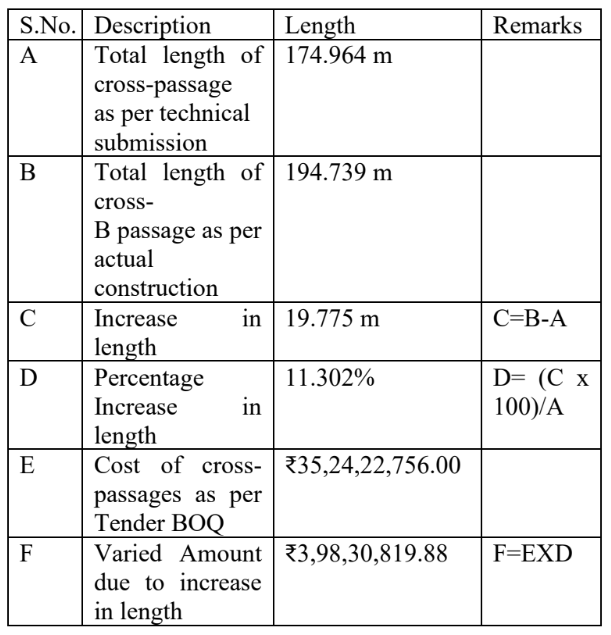
1. The only issue in controversy, in this appeal, is whether the petition under Section 34 of the Arbitration & Conciliation Act, 1996 ("the 1996 Act" hereinafter) by the appellant, was filed within the time stipulated in sub- section (3) ((3) An application for setting aside may not be made after three months have elapsed from the date on which the party making that application had received the arbitral award or, if a request had been made under Section 33, from the date on which that request had been disposed of by the arbitral tribunal:
Provided that if the Court is satisfied that the applicant was prevented by sufficient cause from making the application within the said period of three months it may entertain the application within a further period of thirty days, but not thereafter.) thereof. The issue is squarely covered by the judgments of the Supreme Court in Geojit Financial Services Ltd. v. Sandeep Gurav (2025 SCC OnLine SC 1811) and National Highways Authority of India v. T. Younis (2026 SCC OnLine SC 1060).
2. Section 34(3) of the Arbitration and Conciliation Act, 1996 ("the 1996 Act", hereinafter) prohibits the making of an application under Section 34(1) for setting aside of an award after the expiry of three months from the date when the applicant receives the arbitral award. However, if a request under Section 33(1) (33. Correction and interpretation of award; additional award. -
(1) Within thirty days from the receipt of the arbitral award, unless another period of time has been agreed upon by the parties--
(a) a party, with notice to the other party, may request the arbitral tribunal to correct any computation errors, any clerical or typographical errors or any other errors of a similar nature occurring in the award;
(b) if so agreed by the parties, a party, with notice to the other party, may request the arbitral tribunal to give an interpretation of a specific point or part of the award.) was made by the applicant, the terminus a quo, from which the period of limitation for filing Section 34(1) application would be computed, would stand extended to the date when the Section 33 application is disposed of.
3. Section 33 allows applications only for correcting clerical or typographical errors in a judgment. The issue arising in the present case is as to whether, if the Section 33 application is not for correcting clerical or typographical errors but is in the nature of a wholesale review of the award on merits, the period of limitation under Section 34(3) would nonetheless stand extended till the date of disposal of the Section 33 application. In other words, whether a Section 33 application which, in a sense, is not a Section 33 application at all but an application seeking review of the award, can extend time for the purposes of Section 34(3) of the 1996 Act.
4. This being the limited issue, any detailed allusion to facts would be superfluous, and a brief recital would suffice.
B. Facts
5. The dispute between the appellant and the respondent pertains to a contract agreement dated 28 February 2013, under which certain civil works were to be executed by the respondent for the appellant. On 30 July 2018, the respondent submitted a claim for compensation on account of variations and delay in completion of the work. The claim was rejected by the appellant on 23 May 2019. The respondent invoked arbitration. A three-member Arbitral Tribunal was constituted on 24 September 2020. The majority award, rendered by two members of the Arbitral Tribunal, was released on 23 February 2024 and the dissenting award of the third member was released on 28 February 2024.
6. On 22 March 2024, the appellant preferred an application under Section 33 of the 1996 Act, purportedly for seeking correction of the arbitral award. We deem it appropriate to reproduce the points on which "correction" of the award was sought, in extenso, thus, as they manifest how far the "corrections" sought were removed from clerical or arithmetical errors:
"3. That in respect of Majority Award on claim no. 1 as raised by the Claimant for payment on account of variation due to an increase in numbers/length of Cross Passages; the following factors are worth noting: -
a. The claimant raised a claim of Rs.43,62,64,130/- as additional costs for construction of additional numbers of Cross Passages and also interest @ 18% w.e.f. 18.11.2020 till the date of submission of Claims.
b. In the Majority Award, the Hon'ble Arbitral Tribunal in para 296 has mentioned that it is Respondent's case that NFPA-130-2003 does not provide for the distance of first cross-passage. In this context, it is a matter of record that the Respondent/DMRC had never admitted that distance of first cross-passage is not mentioned in NFPA- 130-2003. Instead, it was clarified that 2003 and 2010 editions are essentially the same and spacing of first cross- passage had been made clearer in 2010 edition of NFP A. Para 33 of SOD is reproduced for kind perusal:
"The Contention of Claimant that BOQ prevails over ODS in accordance to Clause 1.5 of GCC is also misrepresented. The said Clause 1.5 of GCC is referred only in case there are conflicting clauses. Since the Claimant was required to refer to external notes for calculating the spacing of first cross passage and was unable to specify the presence of same in NFPA 2003, the Claimant's contention can, thus, be summarised that NFPA 2010 has spacing a/first cross passage as 244m while NFPA 2003 does not specify any spacing for first cross passage. Even if the said contention was to be considered valid, clause 1. 5 of GCC can't be referred as there are no contrasting spacings given in NFPA 2003 and NFPA 2010 for the first cross passage. In the event of such non-supersession of ODS by BOQ, the Claimant was bound to carry out construction as per ODS.
The Claimant is thus put to strict proof thereto."
c. From mere perusal of above, it is clear that it was the claimant who has not specified the existence of 50 3m spacing of first cross-passage from NFPA-2003. However, the clause of NFPA clearly specifies cross-passages to be provided at a distance not further than 244m.
d. In para 299 of the Majority Award, the Hon'ble Arbitral Tribunal has opined that the location is marked for only 14 cross-passages though the numbering is up-to CP- 15. In this regard, it is a matter of record that the Claimant had mentioned Chainages of CP-2 to CP-15 in its Attachment-I7 to Appendix-5 of Technical Submission made by the Claimant himself. However, in his submission of Tender Programme including Design Submission Programme, in accordance with Clause C8 and C2.3(b) of ITT, as a part of its Technical Submission, the claimant submitted works programme of CP-l also. The Copy of the same is already on record as Annexure R-47 on page 1078 Vol RD-5.
e. In para 302 of the Majority Award, the Hon'ble Arbitral Tribunal has mentioned that in the oral arguments, the Respondent had contended that claim for only 14 cross- passages was approved by HOD level committee. In this regard, it is vehemently denied that no such submission was made by the Respondent. It is pertinent to mention here that the HOD level committee had approved cost of re- designing of 14 Cross-Passages which weren't constructed at the time of instruction to lower the cross-passage floor and reworking cost of 2 cross-passages already constructed.
f. In para 313 of the Majority Award, the Hon'ble Arbitral Tribunal has stated that the Claimant has followed contract provision of assessment of variation which is an agreed method between the parties with regard to determination of quantum of varied items.
In this context, it is worth noting that the determination of quantum of varied item by Claimant in the present claim had not been carried out as per provisions of the Contract Agreement. The Claimant had utilized pro-rata basis citing clause 14(i) of Preamble of the Bill of Quantities which is applicable only for variation in length of tunnel to be constructed by a particular method. The contract clearly specifies two types of tunnels, i.e., Tunnel by Tunnel Boring Machine (Schedule-A3) and Tunnel by Cut & Cover Method (Schedule-A4).
Moreover, on the variation in length of tunnels by aforesaid method, the complete schedule (A3 and A4) is to be varied. On the other hand, Cross-Passages do not fall under the category of any of the above type of tunnels.
Accordingly, the actual cost of construction, in case the variation had been paid and the Respondent/DMRC had categorially pointed out the same in its various submissions and during arguments.
g. In para 314 of the Majority Award, the Hon'ble Arbitral Tribunal has stated that there is no dispute with regard to length of cross-passages actually constructed to be of 222.302m. In this context, it is worth mentioning that the Respondent/DMRC had all through denied the methodology in its submission and also during the cross- examination of CW-2 whereby the said Claimant's witness failed to point out any provision of the Contract Agreement to substantiate its length based pro-rata calculation for quantification.
Since, the length was never agreed by the Respondent, the statement in the Majority Award at para 314 that there is no dispute in the length of actually constructed cross-passages is not tenable. It is submitted that the AT always had full powers to confirm the same from Respondent side whether the said length 222.302m is agreed or not h. In para 316 of the Majority Award, the Hon'ble Arbitral Tribunal has stated that from the pleadings, evidences and arguments of the parties, the twin tunnels inter alia trackways in the present contract is mostly parallel.
It is submitted that the said finding is dehors the pleadings, evidences and no such arguments were ever made by either party during the course of Arbitral proceedings.
It may be added here that the General Alignment Drawings (GADs) of the tunnels were part of the Tender Drawings and the AutoCAD of the same are also available.
Accordingly, calculation of cross-passage length as per Technical submission by the Claimant during bid submission can be easily made from the Tender drawings itself which is available on record. However, the Hon'ble Arbitral Tribunal has committed an erroneous calculation while passing the Award.
i. It is submitted that a detailed calculation sheet giving the correct calculation is annexed herewith as Annexure-I. It may be added here that Annexure-I contains the Cross- Passage lengths as per actual construction at site. If required, the Hon'ble Arbitral Tribunal may hold joint verification of the site alongwith the parties to ascertain the actual facts and figures.
j. The calculation sheet i.e. Annexure-I, clearly shows that the total length of Cross-Passage envisaged in the Technical submission by the Claimant (excluding CP-l which was disregarded by the Arbitral Tribunal) comes out to be 174.964m and the constructed length is 194.739m. Therefore, the increase in length is 19.775m only, i.e. an increase of 11.302% as compared to 60.39% increase, ascertained by Hon'ble Arbitral Tribunal.
4. Accordingly, by considering the pro-rata quantification methodology as adopted by Arbitral Tribunal, the amount against the said claim of increase in number of cross-passages should be as follows:
5. Thus, in respect of claim no.1, the calculation of the awarded amount has been done in an erroneous manner and the same is required to be rectified by the Hon'ble Arbitral Tribunal.
6. That in respect of Majority Award on claim no.2 as raised by the Claimant for payment on account of additional cost/expenses incurred consequent to the extended stay (from 18.05.2016 to 15.12.2017; the following factors are worth noting: -
a. In calculation of claim 2(i) related to additional cost on account of ownership including fixed repair and maintenance of plant and machinery deployed and interest on Capital investment charges, at para no. 262 of the Majority Award, the Hon'ble Arbitral Tribunal has considered cost per month @ 2.31 % of Book value.
It is submitted that while calculating the depreciation cost at the end of alleged demobilization on 15.12.2017 (i.e. 39 months of the original contract duration + 19 months of extended stay); the Hon'ble Arbitral Tribunal has erroneously calculated total depreciation to be 133.98% (=2 .31 % x (39+ 19) months) which is never possible.
It is further submitted that this factor has also been pleaded in para 59 of the Statement of Defence by the Respondent wherein it has been stated that after completion of39 months, value of machinery remains equal to 10% of total amount, which is termed as Scrap Value in terms of the referred Codal provision by the Claimant himself.
Accordingly, the Hon'ble Arbitral Tribunal has erred in making miscalculations and the same need to be rectified.
Furthermore, the Hon'ble Arbitral Tribunal has also erred in the fact that 500kVA diesel generator no. HSJVA512 was not used after September 2016 and had instead, calculated a total of 409 days of overstay. The said facts were also pointed out in Q. No. 37 of cross-examination of Claimant's witness CW-2 on 11.01.2022. The calculation of the Awarded amount on this aspect is also erroneous.
b. The Hon'ble Arbitral Tribunal in its Majority Award has made calculation of claim 2(ii) related to cost on account of Employees and staff remuneration and benefits and claim 2(iii) related to cost on account of office and site establishment expenses (including bank guarantee, commission charges and unrecovered premium charges of insurance policies), in para 264 to 269 of Majority Award.
In this context, it is submitted that the Hon'ble Arbitral Tribunal has erred in calculating the compensation amount of Overhead charges to the tune of Rs.35,19,84,486.001- to corroborate the said claim of the Claimant amounting to Rs. 20,74,29,677.001-.
It is worth mentioning here that the Hon'ble, Arbitral Tribunal has first considered overhead charges on the total contract value and has then calculated the overhead charges for the period of extended stay on pro-rata time basis. However, the Hon'ble Arbitral Tribunal has erred in making calculation as the work amounting to Rs. 765,89,78,991.00/- had already been certified up-to May, 2016 and thus overhead on the same was already considered by the Claimant in its bid submission.
Therefore, considering the formula adopted by the Hon'ble Arbitral Tribunal for the time being, the correct method would be to calculate the ceiling limit of overhead charges during the extended stay on the basis of the amount of work done in extended stay only.
Thus, the balance amount of work done after May 2016 (i.e. during the extended period) amounts to Rs. 100,08,21,009.00/-.
Thus, the ceiling limit of overhead charges comes out to be Rs 8,93,59,018.66/- (=10% of 100,08,21,0091120%, as per the formula considered by the Hon'ble Arbitral Tribunal to determine the compensation in para no. 269).
Furthermore, the Hon'ble Arbitral Tribunal. has made erroneous calculations on the basis of contentions of the claimant whereby he had even considered retirement benefits, payment to subcontractors, rent payment to nearby residents whose buildings were damaged by Claimant etc. under office expenses head.
In this context, the relevance of Q. No. 49 to 57 of cross examination of Claimant's witness CW-2 on 11.01.2022 is worth consideration and had the same been not ignored by the Hon'ble Arbitral Tribunal, the erroneously calculated Award would not have been passed. It may be added here that the said items could have never be considered as overhead charges and thus the cost should also be deducted from the awarded amount.
c. The Hon'ble Arbitral Tribunal has placed calculation of claim 2(iv) related to cost on account of hired equipment in para 270 to 272 of Majority Award. In this regard, Q. No. 59 and 60 of cross examination of Claimant's witness CW-2 on 11.01.2022 and para 71 of SOD have been ignored by the Hon'ble Arbitral Tribunal while making the Award.
The records amply show that the deployment of machinery was varied during the said period on account of requirements of work and was only deployed as and when it was necessary for work. Had the work been completed in original contract period, the same would have been required at that time and cost of which was already included in the bid of the Claimant.
It may be added here that the Hon'ble Arbitral Tribunal erred in making calculations qua the said Award by ignoring the actual facts and moreover, the claimant had failed to submit any proof qua the idling of the machines and their prolonged deployment beyond requirement.
d. The Hon'ble Arbitral Tribunal has placed calculation of claim 2(v) related to cost on account of Fuel consumed by DG sets for illumination etc. In this context, the Hon'ble Arbitral Tribunal has erred in making the calculations while making the Award on this head as by no stretch of imagination, it can be said that cost of illumination could have been incurred, if the site wasn't handed over to the contractor during the original contract period.
Accordingly, the very basis of granting additional cost for illumination in period beyond original completion date for full period of extended stay is based upon erroneous calculations of the Hon'ble Arbitral Tribunal.
e. The Hon'ble Arbitral Tribunal has made calculation of claim 2(vi) related to cost on account of hired scaffolding in para 276 to 278 of its Majority Award. In this context, it is submitted that the said calculation is erroneous as the deployment of scaffolding was varied during the said period on account of requirements of work and was only deployed as and when it was necessary for work.
Moreover, had the work been completed in original contract period, the same would have been required at that time and cost of which was already included in the bid of the claimant.
The Hon'ble Arbitral Tribunal has miscalculated the Awarded amount on this head in completely ignoring Q. No. 59 and 60 of cross-examination of Claimant's witness CW-2 on 11.01.2022 and para 77 of SOD which amply show that the deployment of scaffolding was varied during the said period on account of requirements of work and was only deployed as and when it was necessary for work.
f. With regards to claim 2(viii): cost on account of extra cost on quarterly audit and compliance during the extended stay period, it is submitted that the Hon'ble Arbitral Tribunal has made miscalculations in respect of the calculation of costs payable to the claimant under this claim.
In this context, it is worth mentioning here that up to the stipulated original completion period viz. till 17.05.2016, the Claimant had already executed works amounting to Rs.765,89,78,991/-. It is reiterated that only works amounting to Rs 100,08,21,009/- were executed during the extended period.
The Hon'ble Arbitral Tribunal has erroneously directed the respondent to pay Rs 2,40,28,011/- by considering the cost mentioned in the Schedule Al of the BOQ as the basis and subsequently calculating the cost for this claim on time proportionate basis for the extended period.
The calculation of the Hon'ble Arbitral Tribunal is erroneous as this methodology does not take into account that the claimant has already been suitably paid for the cost incurred for quarterly audit and compliance for the works already executed during the stipulated original completion period.
As per the methodology adopted by Hon'ble Arbitral Tribunal, calculations should be made on Rs 100,08,21,009/- i.e. the quantum of works executed during the extended period. Correspondingly, ceiling limit towards cost for quarterly audit and compliance comes out to Rs 60,04,926/-(Rs 100,08,21,009 x 6 % (for Sch. AI) x 10 %).
The Hon'ble Arbitral Tribunal erred in making the calculation qua this claim on the surmise of the claimant which is arbitrarily based upon BOQ of the contract. Moreover, the same is devoid of any supporting documents whatsoever.
It is submitted that the kind attention of Hon'ble Arbitral Tribunal is drawn towards para 359, wherein, it has been observed that:- "In support of its claim, the Respondent has merely filed its self-prepared alleged" loss calculations". Thus, Respondent has failed to prove their alleged loss".
Thus, on the same analogy and parity, the instant claim should be rejected since no actual details/evidence of cost incurred has been provided by the claimant and there is no basis to ascertain such alleged cost.
g. With regards to claim 2(vii): cost on account of road maintenance during the extended stay period it is submitted that the AT has erred in its findings and calculation of costs payable to the claimant under this claim In this context, it is submitted that till the stipulated original completion period viz. till 17.05.2016, the Claimant had already executed works amounting to Rs. 765,89,78,9911-. It is reiterated that only works amounting to Rs 100,08,21,009/- were executed during the extended period. The Hon'ble Arbitral Tribunal has erroneously directed the respondent to pay ₹ 72,08,4611- by considering the cost mentioned in the bifurcated Schedule A 1 of the BOQ as the basis and subsequently calculating the cost for this claim on time proportionate basis for the extended period.
As per the methodology adopted by Hon'ble Arbitral Tribunal, calculations should be made on Rs 100,08,21,009/- i.e. the quantum of works executed during the extended period. Correspondingly, ceiling limit towards cost for maintenance of roads comes out to Rs 18,01,477/- (Rs 100,08,21,009 x 6 % (for Sch. AI) x 10 %x 30% (Maintenance of roads)).
The Hon'ble Arbitral Tribunal erred in making the calculation qua this claim on the surmise of the claimant which is arbitrarily based upon BOQ of the contract. Moreover, the same is devoid of any supporting documents whatsoever.
It is submitted that the kind attention of Hon'ble Arbitral Tribunal is drawn towards para 359, wherein, it has been observed that:" In support of its claim, the Respondent has merely filed its self-prepared alleged" loss calculations". Thus, Respondent has failed to prove their alleged loss". Thus, on the same analogy and parity, the instant claim should be rejected since no actual details/evidence of cost incurred has been provided by the claimant and there is no basis to ascertain such alleged cost.
7. That in respect of Majority Award on claim no.3 as raised by the Claimant for payment of additional cost consequent to revision in components of minimum rates of wages as per Govt. Notification dated 19.01.2017; the following factors are worth noting:-
a. The Hon'ble Arbitral Tribunal has made erroneous calculation of the instant claim on the surmise that the Respondent had admitted that such variation in labour rates is payable to the Claimant. It is pertinent to mention here that the entire record of the Arbitral Proceeding is devoid of any such admission.
b. It is pertinent here that the Hon'ble Arbitral Tribunal erred in endorsing that the formula of price variation is notional in nature. In such circumstances, it would have been judicious to have called upon the claimant to prove actual cost incurred on account of such variation in minimum wages in the instant case. Moreover, the said proof became more required as the Respondent/DMRC had raised his objections at different stages.
c. Thus, the onus to prove actual damages suffered due to such increase in minimum wages got shifted towards the Claimant and in the instant matter, the Claimant failed to prove the same.
d. It may be added here that while dealing with the Counter Claims of the respondent/DMRC, the Hon'ble Arbitral Tribunal in para 359, of the Majority Award has observed that: - "In support of its claim, the Respondent has merely filed its self-prepared alleged "loss calculations". Thus, Respondent has failed to prove their alleged loss".
Thus, on the same analogy and parity, the instant claim should have been rejected since no actual details/evidence of cost incurred has been provided/proved by the claimant and there is no basis to ascertain such alleged cost. The computation of the instant claim is highly erroneous.
e. It may be added here that in para 330 of the Majority Award, the Hon'ble Arbitral Tribunal has observed that the Claimant had clarified by referring to the Manpower status on record that additional claim 3 is on account of the labours engaged by the Claimant through Piece Rate Worker Agencies/Subcontractor.
Whereas additional cost claimed under Claim 2(ii) is on account of the labours engaged by the Claimant on contract/site roll. The Hon'ble Arbitral Tribunal had considered the aforementioned clarification in para 330. However, it is worth noting that the Labour Coefficient of 0.22 adopted does not exclude any type of labour whether directly or indirectly involved in the project work.
Accordingly, the computation of the instant claim by the Hon'ble Arbitral Tribunal on the basis/reliance of notional formula alone is erroneous and requires to be rectified.
8. It is submitted that the Hon'ble Arbitral Tribunal in its Majority Award has made, computation errors as pointed out/detailed in the forgoing paras and the same need to be rectified."
7. It is plain that the Section 33 application was not for correcting any clerical or typographical errors in the award, but sought a wholesale review of the findings of the learned Arbitral Tribunal. The perceived "errors" which the application sought to underscore related to the merits of the disputes between the parties and questioned the wisdom of the majority award with respect to substantive findings returned on merits as well as alleged computational discrepancies. We have, therefore, no manner of doubt, in our minds, that the application was filed merely to obtain extension of time to file the substantive challenge under Section 34.
8. By order dated 3 June 2024, the learned Arbitral Tribunal rejected the aforesaid application submitted by the appellant.
9. The appellant thereafter challenged the arbitral award, by means of OMP (Comm) 381/2024, before this Court on 29 August 2024.
10. Though the Section 34 petition was filed within the statutory period of limitation, if reckoned from the date when the application submitted by the appellant purportedly under Section 33 of the 1996 Act was rejected, it was beyond the maximum available period of limitation as envisaged under Section 34(3) when reckoned from 23/28 February 2024, when the award was rendered.
11. The respondent in its response, submitted that OMP (Comm) 381/2024 was barred by time, and that the delay which had taken place in filing the petition was beyond the maximum condonable period of delay envisaged in Section 34(3).
12. The appellant contended, per contra, that the period of limitation for the purpose of Section 34 (3) would have to be reckoned not from 23/28 February 2024, when the arbitral award was rendered but from 3 June 2024, when the Arbitral Tribunal rejected the application filed by the appellant.
C. The impugned Judgment
13. By judgment dated 20 February 2025, the learned Single Judge of this Court has dismissed OMP (COMM) 381/2024 filed by the appellant as barred by time. The learned Single Judge has observed that the Section 33 application was not a Section 33 application at all, as it sought a wholesale review of the arbitral award. The application was, therefore, found to be mischievous and an attempt to avoid the limitation provided in Section 34(3). Such an application, holds the learned Single Judge, could never extend limitation. In arriving at his decision, the learned Single Judge has relied, inter alia, on the judgment of the Supreme Court in State of Arunachal Pradesh v. Damani Construction Co. ((2007) 10 SCC 742), particularly on the following passages from the said decision:
"8. Firstly, the letter had been designed not strictly under Section 33 of the Act because under Section 33 of the Act a party can seek certain correction in computation of errors, or clerical or typographical errors or any other errors of a similar nature occurring in the award with notice to the other party or if agreed between the parties, a party may request the Arbitral Tribunal to give an interpretation of a specific point or part of the award. This application which was moved by the appellant does not come within any of the criteria falling under Section 33(1) of the Act. It was designed as if the appellant was seeking review of the award. Since the Tribunal had no power of review on merit, therefore, the application moved by the appellant was wholly misconceived. Secondly, it was prayed whether the payment was to be made directly to the respondent or through the court or that the respondent might be asked to furnish bank guarantee from a nationalised bank as it was an interim award, till final verdict was awaited. Both these prayers in this case were not within the scope of Section 33. Neither review was maintainable nor the prayer which had been made in the application had anything to do with Section 33 of the Act. The prayer was with regard to the mode of payment. When this application does not come within the purview of Section 33 of the Act, the application was totally misconceived and accordingly the arbitrator by communication dated 10-4-2004 replied to the following effect:
"However, for your benefit I may mention here that as per the scheme of the Act of 1996, the issues/claims that have been adjudicated by the interim award dated 12-10-2003 are final and the same issues cannot be gone into once again at the time of passing the final award."
9. Therefore, the reply given by the arbitrator does not give any fresh cause of action to the appellant so as to move an application under Section 34(3) of the Act. In fact, when the award dated 12-10-2003 was passed the only option with the appellant was either to have moved an application under Section 34 within three months as required under sub-section (3) of Section 34 or within the extended period of another 30 days. But instead of that a totally misconceived application was filed and there too the prayer was for review and with regard to mode of payment. The question of review was totally misconceived as there is no such provision in the Act for review of the award by the arbitrator and the clarification sought for as to the mode of payment is not contemplated under Section 33 of the Act. Therefore, in this background, the application was totally misconceived and the reply sent by the arbitrator does not entitle the appellant a fresh cause of action so as to file an application under Section 34(3) of the Act, taking it as the starting point of limitation from the date of reply given by the arbitrator i.e. 10-4-2004."
14. The learned Single Judge has, therefore, dismissed OMP (Comm) 381/2024 as barred by time.
15. Aggrieved thereby, the appellant has approached this Court. We have heard Mr. Parag P. Tripathi, learned Senior Counsel for the appellant and Mr. Dayan Krishnan, learned Senior Counsel for the respondent.
16. Written submissions have also been filed.
D. Submissions and analysis thereof
17. The appellant has placed reliance on the judgment of the Supreme Court in Geojit Financial Services Ltd., Geojit, we may note, has noticed Damani and distinguished it. Geojit has later been followed by another two Judge Bench of the Supreme Court in T. Younis. The relevant paragraphs from Geojit and T. Younis may be reproduced thus:
From Geojit
"23. A conjoint reading of Section 33 and Section 34 sub-section (3) of the 1996 Act respectively makes it abundantly clear that the limitation period for preferring an application for setting aside, where a request was made by either party under Section 33 of the 1996 Act, commences from the date when such request made under Section 33 was disposed of by the arbitral tribunal.
24. In a case where the arbitral tribunal considers a request under Section 33 of the 1996 Act, for correction of the award to be justified, the tribunal shall make the correction. In such scenario the aggrieved party has to pray for setting aside the corrected award and not the original award, as the original award stands merged with the corrected award, and it is the latter which is binding on all parties. The original award ceases to be of any significance, either for enforcement or for the purpose of challenging it in appeal.
25. The natural corollary of the aforesaid is that unless and until a decision on the request under Section 33 of the 1996 Act is made, which may or may not have culminated into any correction or interpretation or rendition of an additional award, there can be no effective occasion for a party otherwise aggrieved by the said award to apply for the setting aside of the same under Section 34 of the 1996 Act.
26. Thus, what is material for the purpose of computation of limitation under Section 34 sub-section (3) of the 1996 Act, where a request was made in terms of Section 33, is not whether such request fell within the purview of the said provision or not, but only the factum that such request was made in the manner delineated under Section 33 i.e., it was made "within thirty days from the receipt of the arbitral award" and "with notice to the other party".
27. The aforesaid flows from the reason that once the arbitral award is amended/corrected, it is, for all purposes, in the form of an award itself under Section 31 of the 1996 Act, distinct from the award that was originally passed, prior to the making of such request. It would be this award alone, and not the original award passed prior to the request under Section 33 of the 1996 Act, which has to be challenged.
28. This Court in Ved Prakash (supra) (Ved Prakash Mithal & Sons v. Union of India, 2018 SCC OnLine SC 3181) specifically rejected the contention that that the expression "disposed" mentioned in Section 34 sub-section (3) of the 1996 Act would have to be read in consonance with and in harmony with Section 33. It held that the Section 34 sub-section (3) when read with Section 33 of the 1996 Act, cannot be possibly understood to mean that only in cases where some positive step has, in fact, taken place under Section 33 whereby the award is either corrected or modified, that limitation would then be computed from the date of disposal of the application or request under Section 33 of the 1996 Act. The expression "disposed" used in Section 34 sub-section (3) of the 1996 Act does not merely refer to an award which is ultimately corrected or modified, it refers to all scenarios where after consideration of an application under Section 33 of the 1996 Act, that fulfils the twin conditions of having being made "within thirty days from the receipt of the arbitral award" and "with notice to the other party", was disposed by the arbitral tribunal, including scenarios where such application is merely dismissed.
29. If at all the intention of the legislature was that the date of disposal of only those applications under Section 33 of the 1996 Act which culminated into a correction or interpretation of the award or rendition of an additional award, would be of relevance for the purpose of computation of limitation under Section 34 of sub-section (3), then it would not have used the word "disposed" therein, and would have employed the word "allowed" instead.
30. The aforesaid may be looked at from one another angle. Even if we assume for a moment, that where an application under Section 33 of the 1996 Act, is not entertained for want of maintainability or for reason of falling beyond the parameters of the provision, the same, in such scenario, would not amount to passing of an award in terms of Section(s) 31 read with 33 of the 1996 Act, and thus there would be no distinct award in existence from what was originally passed by the arbitral tribunal prior to the making of the request under Section 33, even then, the interpretation that found favour with the High Court in the impugned order, to our minds, cannot be regarded to have laid down the correct proposition of law.
31. We say so because, the fundamental cannons of law of limitation demands, as a thumb rule, that any period of commencement and end of limitation should be determinable and ascertainable in an objective parameter. The law of limitation, at least insofar as the computation of the prescribed period of limitation is concerned, cannot be read in a hyper-technical or subjective manner. The same must in most cases, if not always, adorn a formulaic understanding that is comprehendible to the litigants. It however, cannot be tied or made contingent to the ultimate fate of the application under Section 33 of the 1996 Act.
32. In consonance with this principle, it must be said that the reason for dismissal of an application filed under Section 33 of the 1996 Act cannot form a yardstick for determining when limitation would commence. Therefore, as provided in sub-section (3) of Section 34 of the 1996 Act, in a case where a request or an application is made under Section 33 of the 1996 Act, the limitation period to later seek the setting aside of the award can only commence from the date when the application is disposed of, for whatever reasons.
33. We are conscious of the decision of this Court in State of Arunachal Pradesh v. Damani Construction Co., wherein this Court had purportedly held that where an application filed under Section 33 of the 1996 Act does not fall within any of the criteria stipulated therein, in other words, as stipulated in clauses (a) or (b) of sub-section (1) or sub-section (4), as the case may be, such application would be of no significance, for the purpose of computation of limitation under Section 34 sub-section (3) of the 1996 Act. It held that where any application seeks any correction or modification of an award, which is beyond the scope of what is contemplated under the said provision, such an application would not fall within the purview of Section 33 of the Act, 1996 and even if the arbitral tribunal decides and disposes such an application, the date of disposal of the same would have no bearing on the computation of limitation under Section 34 sub-section (3) of the 1996 Act. The relevant observations read as under: -
"8. Firstly, the letter had been designed not strictly under Section 33 of the Act because under Section 33 of the Act a party can seek certain correction in computation of errors, or clerical or typographical errors or any other errors of a similar nature occurring in the award with notice to the other party or if agreed between the parties, a party may request the Arbitral Tribunal to give an interpretation of a specific point or part of the award. This application which was moved by the appellant does not come within any of the criteria falling under Section 33(1) of the Act. It was designed as if the appellant was seeking review of the award. Since the Tribunal had no power of review on merit, therefore, the application moved by the appellant was wholly misconceived. Secondly, it was prayed whether the payment was to be made directly to the respondent or through the court or that the respondent might be asked to furnish bank guarantee from a nationalised bank as it was an interim award, till final verdict was awaited. Both these prayers in this case were not within the scope of Section 33. Neither review was maintainable nor the prayer which had been made in the application had anything to do with Section 33 of the Act. The prayer was with regard to the mode of payment. When this application does not come within the purview of Section 33 of the Act, the application was totally misconceived and accordingly the arbitrator by communication dated 10-4-2004 replied to the following effect:
"However, for your benefit I may mention here that as per the scheme of the Act of 1996, the issues/claims that have been adjudicated by the interim award dated 12-10-2003 are final and the same issues cannot be gone into once again at the time of passing the final award."
9. Therefore, the reply given by the arbitrator does not give any fresh cause of action to the appellant so as to move an application under Section 34(3) of the Act. In fact, when the award dated 1210-2003 was passed the only option with the appellant was either to have moved an application under Section 34 within three months as required under sub-section (3) of Section 34 or within the extended period of another 30 days. But instead of that a totally misconceived application was filed and there too the prayer was for review and with regard to mode of payment. The question of review was totally misconceived as there is no such provision in the Act for review of the award by the arbitrator and the clarification sought for as to the mode of payment is not contemplated under Section 33 of the Act. Therefore, in this background, the application was totally misconceived and the reply sent by the arbitrator does not entitle the appellant a fresh cause of action so as to file an application under Section 34(3) of the Act, taking it as the starting point of limitation from the date of reply given by the arbitrator i.e. 10-4-2004."
(Emphasis supplied)
34. However, we are of the considered opinion that the decision of Damani Construction (supra) is not applicable and is distinguishable. A close reading of the aforesaid decision would reveal that in the said case, the appellant therein had never formally moved an application under Section 33 of the 1996 Act, but rather had only addressed a letter to the arbitrator, requesting it inter-alia, to review the award passed by it and seeking ancillary clarifications which did not concern the contents of the award so passed. It is in this background that this Court in Damani Construction (supra), in the absence of any formal application or any prayer contemplated under Section 33 of the 1996 Act, refused to treat the letter addressed by the appellant therein as an application thereunder. It however, does not mean that where a party moves an application under Section 33 of the 1996 Act within the limitation period prescribed therein and with notice to the other party, that the same would nevertheless not be treated as an application under the said provision, merely because what is sought under the guise of 'correction' or 'modification' is outside the ambit of the Section 33. It would still continue to be an application under Section 33 of the 1996 Act for the limited extent of computation of the period of limitation under Section 34, as long as it fulfils the two conditions prescribed under Section 33, as already discussed by us."
From T. Younis
"9. The learned senior counsel appearing for the Appellant submitted that both the parties had filed applications under Section 33 of the Act, therefore, the Appellant could not have filed the application under Section 34 of the Act, before disposal of the said applications. It is contended that High Court erred in refusing to exclude the period spent in disposal of the application under Section 33 while computing the limitation under Section 34(3) of the Act and erred in placing reliance on the decision in State of Arunachal Pradesh v. Damani Construction Co. It is urged that the application under Section 33(1)(a) merely sought correction of clerical and typographical errors in the Arbitral Award and did not amount to review of the Award. It is submitted that the issue involved in the appeal is no longer res integra and has been dealt with by this Court in Geojit Financial Services Ltd. v. Sandeep Gurav.
10. Per contra, learned senior counsel for Respondent No. 1 submitted that the application filed by the Appellant under Section 33(1)(a) of the Act, in substance was an attempt to review the Arbitral Award and not merely an application for correction of clerical or typographical errors. It was contended that Appellant had sought modification of substantive findings in the Award which fell outside the limited scope of Section 33(1)(a). It was urged that only an application which is maintainable under Section 33 could extend the limitation under Section 34(3) of the Act. Relying on State of Arunachal Pradesh (supra), it was contended that since the Appellant's application under Section 33 of the Act was itself not maintainable, it could not claim exclusion of time spent in disposal of the said application for the purposes of limitation. It was argued that Arbitral Tribunal had become functus officio after passing of the Award and therefore the merits of the dispute could not be reopened in the guise of an application under Section 33 of the Act. It was further argued that Appellant's applications under Section 34 were barred by limitation as the same were filed beyond the statutory outer limit prescribed under Section 34(3) of the Act, even assuming that the Appellant is entitled to exclusion of time for the period spent in disposal of application under Section 33 of the Act.
11. Having heard the rival contentions and perusing the material on record, the issue that arises is whether the limitation under Section 34(3) would commence from the date of the original award or from the date on which the application under Section 33 came to be disposed of.
*****
16. The reliance placed by the Respondent on State of Arunachal Pradesh (supra) is misplaced. That case arose in an entirely different factual context where there was no formal application under Section 33 invoking the jurisdiction of the Arbitral Tribunal. The party had merely addressed a letter, in substance seeking review of the award and certain ancillary clarifications beyond the contours of section 33. It was in that context, that this Court held such communication could not entitle a fresh starting point of limitation under Section 34(3). The facts of the present case stand on an entirely different footing. Here, formal applications under Section 33 were admittedly filed by both parties within the statutory period, and the same were entertained and disposed of by the Arbitral Tribunal by a common order dated 04.07.2022."
18. Thus, Geojit distinguished Damani by observing that, in Damani, there was no application filed under Section 33 at all and that a mere letter had been submitted to the arbitrator. Where an application was filed, then, irrespective of the merits of the application, and even if the application was a mere sham and therefore not maintainable at all, the decisions in Geojit and T. Younis make it clear that the period of limitation for the purposes of the Section 34(3) would commence only from the date when the application is disposed of. These decisions make it clear that the interpretation which the learned Single Judge has adopted in the present case would require re- writing of Section 34(3) to provide for extending of the period of limitation from the date of disposal of the Section 33 application only where the Section 33 application is actually maintainable. This, according to the Supreme Court, is impermissible.
19. The Supreme Court has, however, in T. Younis, clearly held that in a case where the Section 33 application is found to be a sham, the Court can and must award punitive costs. The Section 34 petition cannot, however, be dismissed as time barred, ignoring the time spent in disposing of the Section 33 application, howsoever frivolous it might have been.
20. We are bound by the declaration of the law in Geojit and T. Younis. Accordingly, the impugned judgment of the learned Single Judge, which follows Damani cannot sustain. It has, therefore, necessarily to be quashed and set aside.
21. At the same time, it is clear that in fact the application under Section 33 was completely lacking in bona fides. By no stretch of imagination can it be said that the application was mistakenly filed, under a bona fide assumption that it fell within the parameters of Section 33. The application does not seek correction of any clerical or typographical error in the arbitral award. Instead, it seeks to point out various perceived errors in the award of understanding the contractual provisions, computing the amounts involved and such like. In fact, it would not be too far from the truth to hold that the application is even beyond the normally understood parameters of review jurisdiction and essentially seeks a re-adjudication of the entire dispute.
22. It is not possible for us to believe that an organization such as the appellant did not know the fundamentals of Section 33 and what is permitted thereunder. This, therefore, is a classic case of misuse of Section 33, perhaps with a view to obtain breathing space to launch the challenge to the substantive award.
23. We are of the opinion that this is an eminently fit case for awarding punitive costs as suggested by the Supreme Court in T. Younis. At the same time, we bear in mind the fact that the appellant is a public sector undertaking and that, therefore, the ultimate impact of the costs we may award would be on the public exchequer.
E. Conclusion
24. Accordingly, while we are constrained to set aside the impugned judgment of the learned Single Judge in view of the declaration of the law in Geojit and T. Younis and hold that the Section 34 petition of the appellant could not have been rejected as barred by time, we nonetheless burden the appellant with costs of ₹ 5,00,000/- (Rupees five lakhs only) to be paid by the appellant to the respondent within a period of twelve weeks from the date of pronouncement of this judgment.
25. The appeal stands disposed of in the aforesaid terms.
26. Let the judgment be uploaded on the website of this Court forthwith.